Enterprises Face 2026 Deadline for NIST-Compliant Post-Quantum Cryptography Migration and Infrastructure Readiness

TL;DR
- ✓ The 2026 NIST deadline mandates immediate transition to post-quantum cryptographic standards.
- ✓ Harvest Now Decrypt Later attacks make current legacy encryption a major security liability.
- ✓ Organizations must audit cryptographic assets to handle increased computational requirements for new algorithms.
- ✓ A multi-year migration roadmap is essential to avoid catastrophic intellectual property data breaches.
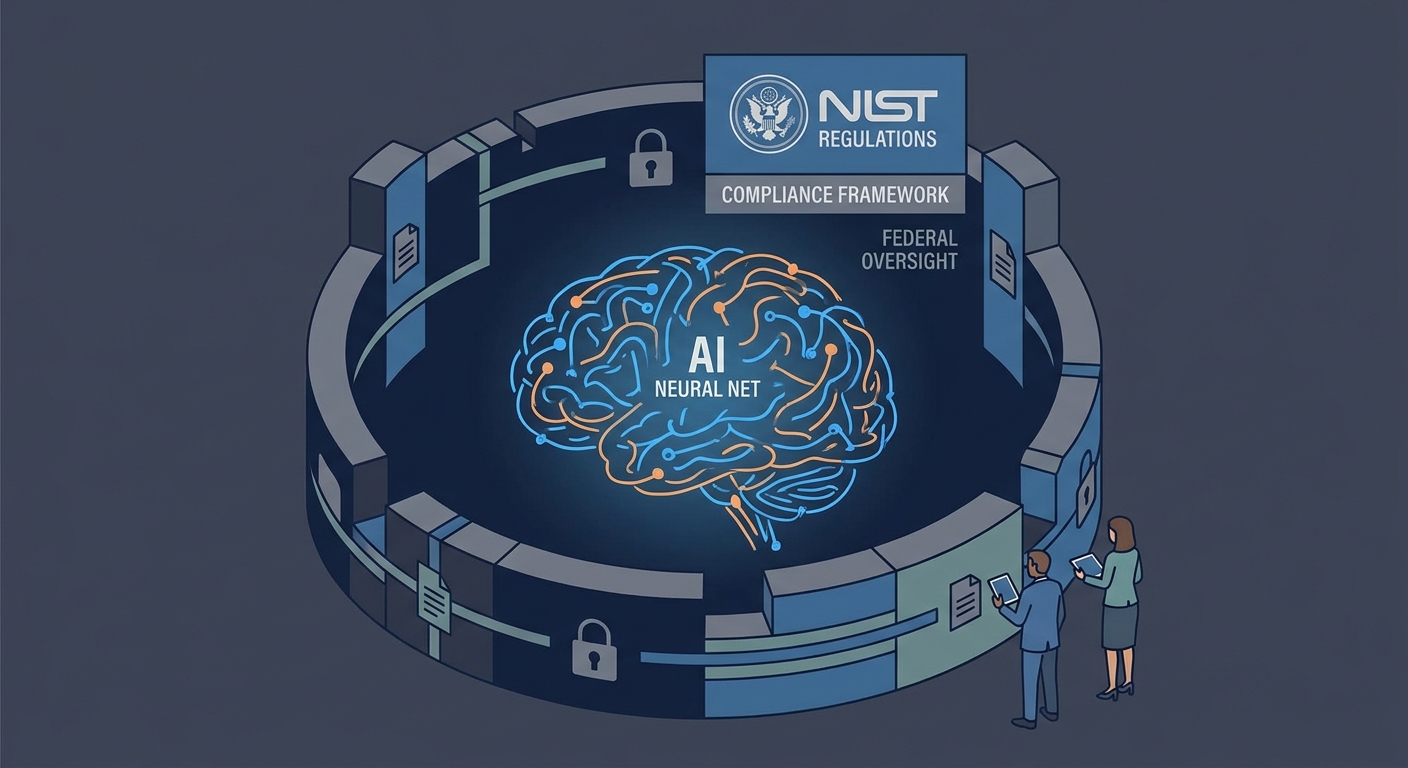
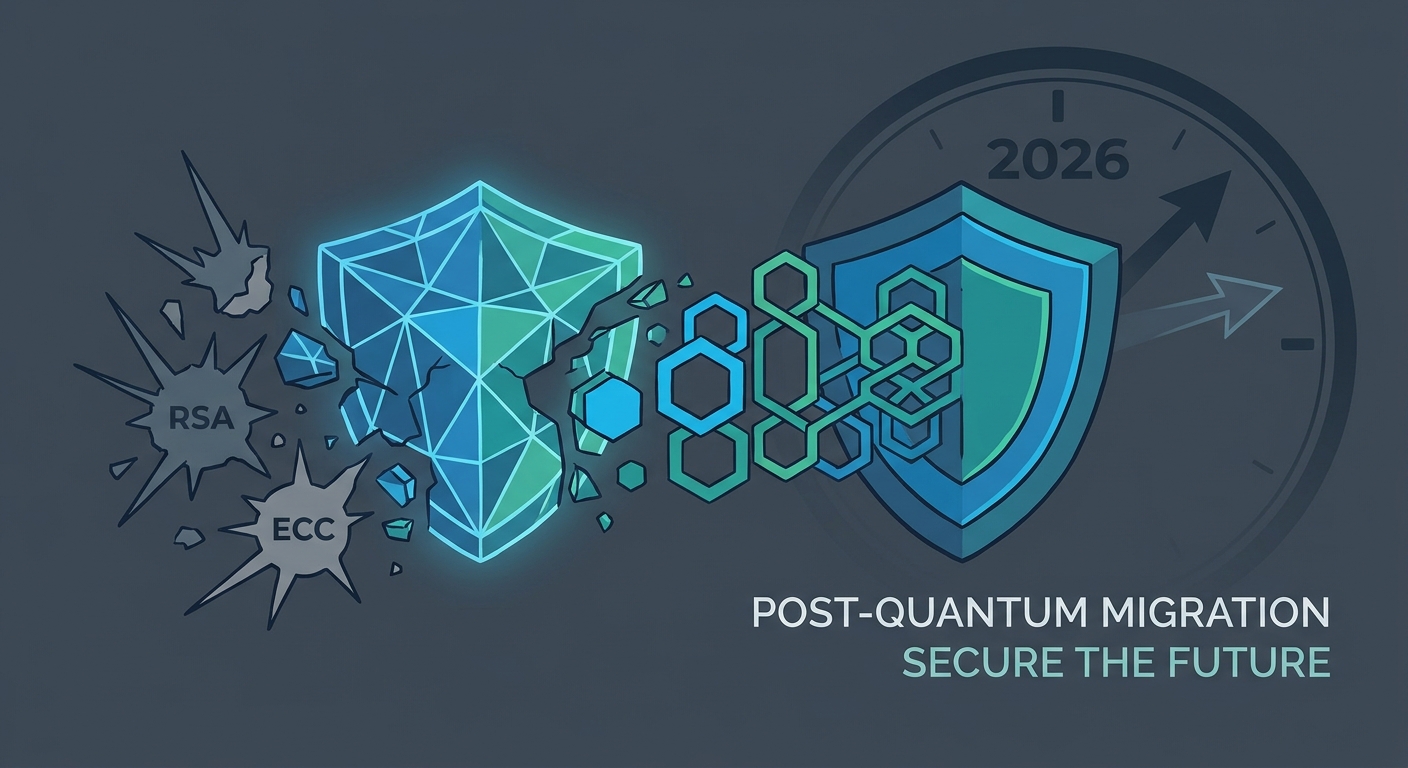
2026 isn’t some abstract, far-off date on a corporate calendar. It’s a hard stop. If your enterprise is still leaning on legacy RSA and ECC algorithms for long-term data security, you’re essentially running on borrowed time. With NIST having finalized FIPS 203, 204, and 205, the era of "good enough" encryption is officially over.
Fail to align your infrastructure now, and you aren't just missing a software update window. You’re leaving your most sensitive intellectual property and customer data wide open to a threat that’s already stalking your network. As we break down in our NIST 2026 Migration Guide, this is an existential shift. It needs to be on your board’s agenda today—not next quarter.
The Silent Killer: "Harvest Now, Decrypt Later"
Here’s the biggest lie in cybersecurity: "I don't have to worry about quantum computers because they don't exist yet."
That’s a dangerous gamble. It ignores the reality of the "Harvest Now, Decrypt Later" (HNDL) paradigm. As outlined in this Palo Alto Networks HNDL analysis, bad actors are already vacuuming up massive amounts of encrypted traffic. They don't need to crack your code today. They just store it in "Quantum Vaults" and wait for the hardware to catch up.
Think about your data. If you’re holding onto patent filings, trade secrets, PII, or state-level intelligence that needs to stay private for five years or more, you’re already in the crosshairs. The math is brutal: if your data’s shelf life is longer than the time it takes to build a cryptographically relevant quantum machine, that data is compromised the second it touches a public network. Waiting for "Q-Day"—the moment your current encryption becomes digital confetti—is a strategy for failure. The breach is happening in silence, right now.
Deciphering NIST FIPS 203, 204, and 205
NIST’s push toward lattice-based cryptography is the biggest shake-up to global security protocols in decades. We’re talking about the new gold standards: CRYSTALS-Kyber for key encapsulation (FIPS 203) and CRYSTALS-Dilithium for digital signatures (FIPS 204/205).
But don't mistake this for a simple "swap and deploy" job. You can't just flip a switch; these new algorithms are hungry. They have larger key sizes and different computational overheads than the RSA and ECC you’ve been using for years. As the NIST Migration to PQC project points out, the challenge is weaving these standards into your existing stack without breaking performance. You need to know exactly where your certificates live, how they’re signed, and which legacy hardware is physically incapable of handling these memory-intensive requirements.
Building Your Migration Roadmap
Migration is a multi-year grind. You have to move from a state of total cryptographic ignorance to one of absolute visibility. We recommend a phased approach so you can harden your defenses without grinding your core operations to a halt.
Phase 1: Discovery (The Cryptographic Inventory)
You can't protect what you can't see. Most enterprises are drowning in "cryptographic debt"—a mess of hard-coded certificates, ancient TLS versions, and undocumented private keys hidden in cloud buckets and forgotten servers. Start by auditing every single point where encryption is invoked. No exceptions.
Phase 2: Risk Assessment (Categorizing High-Value Data)
Not all data is created equal, but all of it needs a plan. Categorize your assets by how long they need to stay secret. If you have medical records or financial models with ten-year retention requirements, those go to the front of the line.
Phase 3: Pilot Implementation
Before you roll anything out globally, test it. Use non-production environments to see how CRYSTALS-Kyber behaves. How do your load balancers, VPNs, and HSMs handle the bigger packet sizes? You need to know before you go live.
Phase 4: Scaling through Automation
If you’re still managing certificates via spreadsheets and manual tickets, you’re going to lose. The sheer volume of keys that need rotating and re-validating in a post-quantum world demands a "Zero-Touch" approach. Scaling only happens when you move to policy-driven lifecycle management.
Why Crypto-Agility is Your Only Way Out
For too long, the industry has treated encryption algorithms like fixed, permanent laws of physics. That’s a massive mistake. You need "crypto-agility."
Crypto-agility is the ability to swap out your encryption algorithms without tearing down your entire application logic. If your crypto is hard-coded, you’re building a house of cards. One vulnerability, one quantum breakthrough, and the whole thing comes down. A truly agile architecture decouples your app from the crypto-provider, letting your team pivot algorithms via a central orchestration layer as the threat landscape shifts.
Procurement: Don't Buy Your Own E-Waste
Check the CISA guidance on PQC-ready product categories before your next procurement meeting. If you’re buying hardware today—HSMs, load balancers, servers—demand "quantum-readiness."
If a vendor can’t show you a roadmap for firmware-level support of FIPS 203, 204, and 205, walk away. Buying non-compliant gear in 2025 is just buying future e-waste. If you don't align your procurement now, your 2027 budget is going to get hammered by an emergency "rip-and-replace" project.
The Power of Automation
Remember the days when security teams managed certs with calendars and manual reminders? Those days are dead. Post-quantum migration requires speed that humans just can't match.
You’re dealing with ephemeral keys and short-lived certificates. Your infrastructure needs to be self-healing. Zero-touch automation detects when a certificate is about to expire or when a policy change is needed, and it pushes those updates across thousands of nodes in seconds. If you aren't automating your identity management, you aren't just slow—you’re a sitting duck.
Assessing Your Maturity
The 2026 deadline isn't a suggestion. It’s the point where doing nothing becomes more expensive than doing something. The risk is simple: if you can’t guarantee the integrity of your communications, you lose the trust of your customers, your board, and your regulators.
Audit your posture now. If you aren't sure where you stand or you need a clear, actionable roadmap, take a look at our readiness assessment solutions. It's time to quantify that cryptographic debt and build a strategy that actually lasts.
Frequently Asked Questions
What is the "Harvest Now, Decrypt Later" threat, and does it apply to my organization?
HNDL is the practice of intercepting and storing encrypted data today with the expectation that future quantum computing power will be able to decrypt it. If your organization handles data that must remain private for five years or more, you are a prime target for this threat, as your "protected" data is effectively being held for future ransom or intelligence gathering.
Do I need to replace all my hardware to become quantum-compliant by 2026?
Not necessarily. While some aging hardware will lack the processing power or memory to handle the larger keys required by PQC, many modern devices can be updated via firmware. The key is to conduct a thorough inventory to distinguish between systems that can be patched and those that have reached their end-of-life and require physical replacement.
What are the official NIST standards (FIPS 203, 204, 205) and why do they matter?
These standards represent the official, government-vetted algorithms for post-quantum security. Using these ensures that your encryption is interoperable, vetted against known quantum attacks, and compliant with emerging regulatory requirements. Avoid proprietary "quantum-safe" solutions that have not been put through the rigorous NIST standardization process.
How does "crypto-agility" differ from a standard security update?
A standard security update is a patch for a specific, known vulnerability. Crypto-agility is an architectural philosophy. It involves separating your application logic from the cryptographic provider, allowing your organization to swap out entire encryption algorithms via a central policy engine without needing to rewrite your underlying software.
Is the 2026 deadline a "hard" regulatory date or a recommendation?
While the 2026 date is often framed as a target for federal agencies and critical infrastructure, it effectively serves as a hard market deadline. Once federal mandates like CNSA 2.0 go into effect, vendors, service providers, and partners will be forced to adopt these standards to maintain business relationships, making compliance a prerequisite for doing business in the enterprise sector.