5 Essential Best Practices for AI Data Security in the Post-Quantum Era

TL;DR
- ✓ Understand the immediate threat of Harvest Now Decrypt Later attacks on AI data.
- ✓ Recognize why AI model training sets are high-value targets for future quantum decryption.
- ✓ Implement hybrid cryptographic layers to ensure both classical and quantum-resistant protection.
- ✓ Transition your AI infrastructure to a future-proof architecture against quantum computing risks.
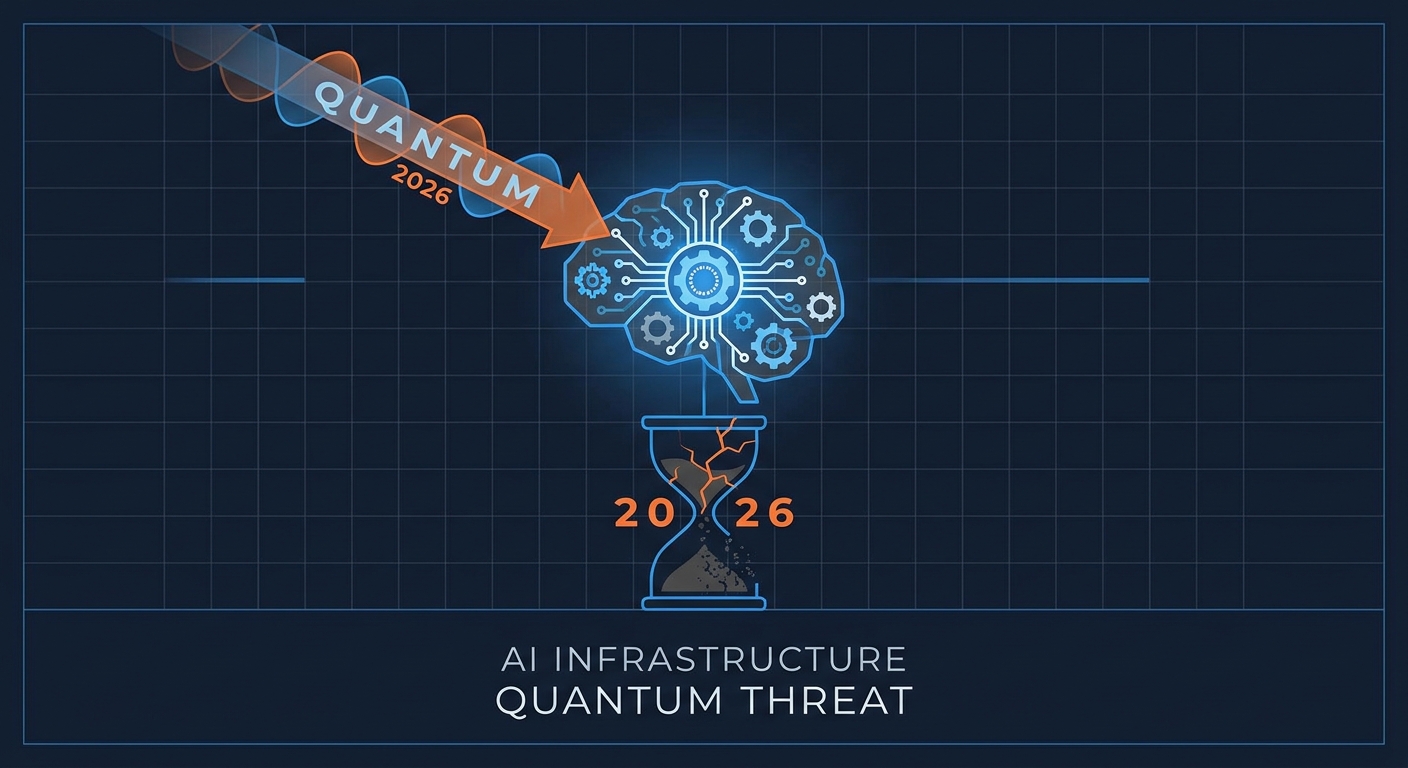
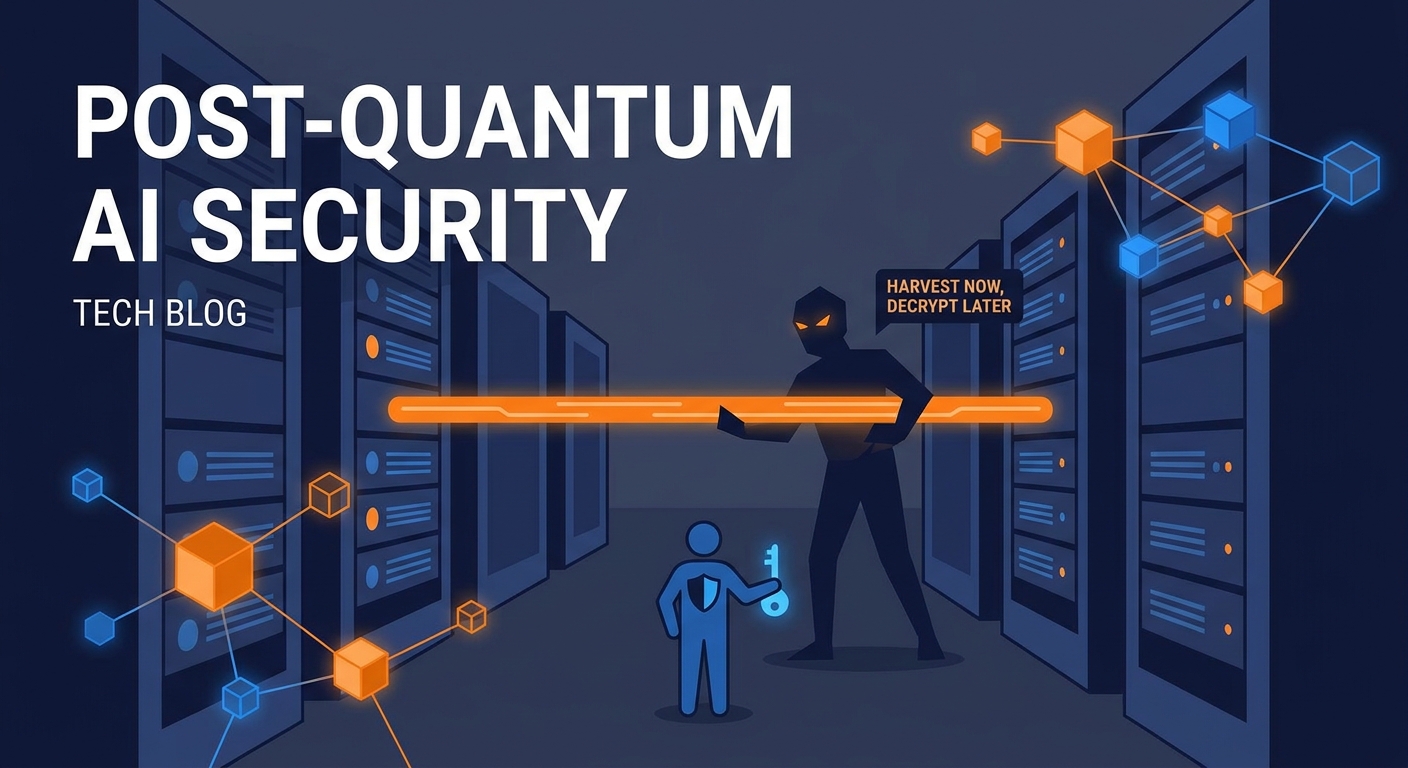
The threat to your AI infrastructure isn’t some distant, sci-fi nightmare waiting for a breakthrough in a physics lab. It’s happening right now. It’s called a "Harvest Now, Decrypt Later" (HNDL) attack, and it’s as aggressive as it sounds.
Adversaries are currently vacuuming up massive troves of encrypted data—training sets, proprietary model weights, and agentic context—with one goal: store it until cryptographically relevant quantum computers (CRQCs) become powerful enough to shatter modern encryption like glass. Since AI models are long-lived assets, the data you exfiltrate today remains a high-value intelligence target for years. Securing your AI pipeline requires a fundamental shift. You have to stop relying on static, classical security and move toward a future-proof architecture that assumes the underlying math of RSA and ECC is already compromised.
Why is AI the Primary Target for Quantum-Enabled Attacks?
The inherent nature of AI makes it the perfect candidate for HNDL strategies. Think about standard transactional data; it usually loses its value in a matter of hours or days. But the intellectual property baked into a Large Language Model (LLM) or a specialized machine learning pipeline? That has a shelf life of years.
As detailed in the Cloud Security Alliance research on AI infrastructure and HNDL threats, exfiltrated training data provides a roadmap of an organization’s strategic intent, customer PII, and proprietary algorithmic logic.
If an attacker intercepts your model training traffic today, they aren't just stealing data—they are stealing the future capability of your enterprise. By the time quantum hardware matures, that data won’t have lost an ounce of its strategic value. It will simply be sitting there, waiting for the key to be turned.
How Do We Secure AI Data in a Post-Quantum World? (The 5 Best Practices)
Transitioning to a post-quantum posture isn't a "rip and replace" job. It’s a strategic pivot toward resilience. Here is how you get there.
1. Implement Hybrid Cryptography for Data-in-Transit
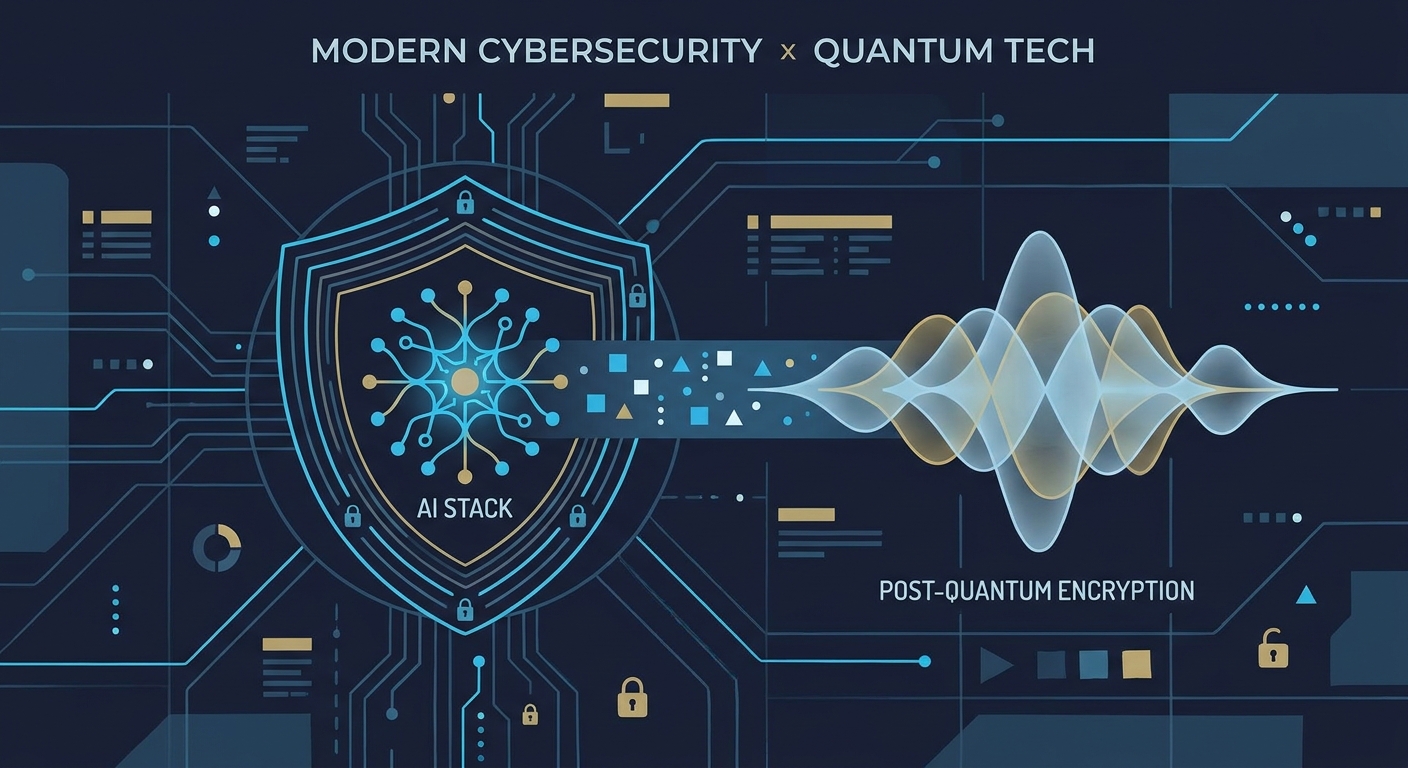
We can’t just abandon classical encryption overnight. The performance overhead is too high, and the maturity of pure Post-Quantum Cryptography (PQC) isn't quite there yet for a standalone solution. The industry consensus? Adopt a hybrid approach. Layer established algorithms like RSA or ECC with NIST-approved PQC algorithms.
Think of this like wearing a belt and suspenders. If a flaw is discovered in a new, experimental quantum-resistant algorithm, your traffic stays protected by the classical layer. If a quantum computer shows up sooner than predicted, the PQC layer picks up the slack. It’s the safest bet for high-stakes data.
2. Harden Model Context Protocol (MCP) Deployments
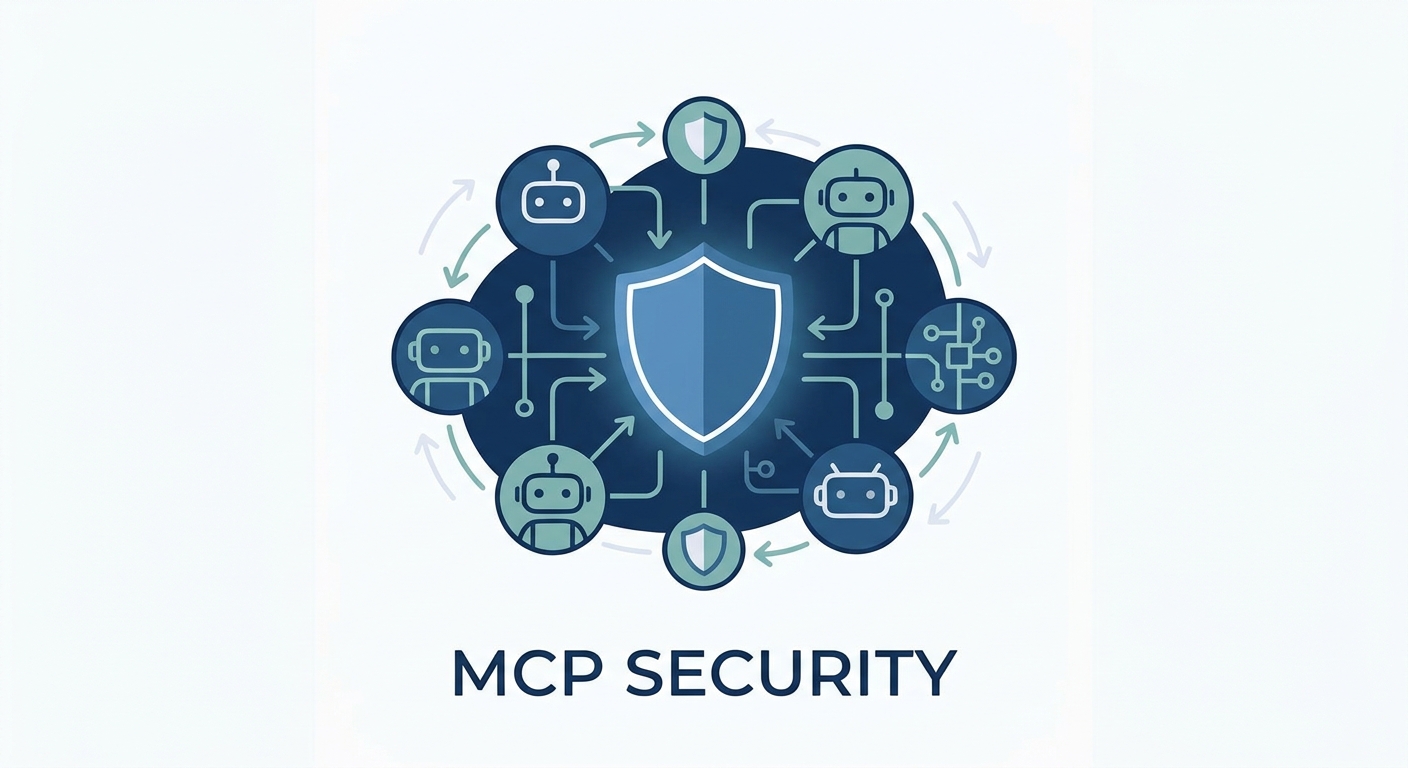
The Model Context Protocol (MCP) has become the go-to standard for connecting AI agents to enterprise data. But as noted in the Gopher Security guide on post-quantum AI infrastructure, the protocol is only as secure as the transport layer it rides on. If you’re using standard TLS for MCP connections, you’re essentially broadcasting your most sensitive internal context to anyone with enough storage and patience.
You need to upgrade your MCP infrastructure to support quantum-safe TLS. Reconfigure your AI gateways to prioritize PQC-negotiated handshakes immediately. For a deeper dive into the mechanics of this, refer to the CyberArk definition of the Model Context Protocol to understand exactly what "context" is being passed and where it’s vulnerable.
3. Adopt Crypto-Agility for Your AI Pipeline
Crypto-agility is just a fancy way of saying: "Don't hard-code your security." In a 2026 landscape where standards shift every few months, hard-coding a specific algorithm into your model training pipeline is a recipe for technical debt and disaster.
Architect your systems to use modular cryptographic providers. When a new quantum-resistant standard pops up—or an existing one is deemed weak—you should be able to update your configuration files, not your entire codebase. This agility prevents vendor lock-in and ensures that your internal AI agents can pivot as fast as the threat landscape evolves.
4. Establish Quantum-Safe Key Management
Traditional Key Management Systems (KMS) were built in an era where integer factorization was considered an insurmountable mathematical problem. In the quantum era, these systems are single points of failure. The shift must be toward hardware-level quantum-safe key storage.
Hardware Security Modules (HSMs) are being redesigned right now to handle the larger key sizes and increased computational demands of PQC algorithms. As explained in the Gopher Security Quantum-Resistant Key Management FAQ, relying on software-based key management for critical AI assets simply isn't enough. You need HSMs that can perform quantum-resistant signing and key derivation at the silicon level.
5. Prioritize Continuous AI Data Posture Monitoring (DSPM)
You can't secure what you can't see. Modern Data Security Posture Monitoring (DSPM) needs to evolve beyond just flagging PII; it needs to include "Quantum Risk Scoring" for every data pipeline.
Audit where your training data lives, how it travels to the inference engine, and what happens to the output. If a data pipeline is moving sensitive context across an unencrypted or classically-encrypted-only link, your DSPM tool should trigger an immediate alert. In the post-quantum era, visibility is the foundation of defense.
Moving Beyond Software: Is Hardware-Level Security the Final Frontier?
Software patches are a good start, but they’re fighting a losing battle against the sheer raw processing power of quantum hardware. We’re seeing a massive industry migration toward hardware-level security, where PQC is baked into storage controllers, network interface cards (NICs), and the compute chips themselves.
Software-only security is inherently fragile. If an attacker gains kernel-level access, your software-defined encryption is easily bypassed. By moving the security boundary down to the hardware, you ensure that even if the operating system is compromised, the data remains encrypted at rest and in motion using quantum-resistant logic. For high-stakes enterprise AI, this is no longer optional—it is the new baseline for infrastructure architecture.
Frequently Asked Questions
Why is my AI data at risk if I don't have a quantum computer yet?
Because attackers are performing "Harvest Now, Decrypt Later" (HNDL) attacks—stealing your encrypted data today to decrypt it as soon as quantum computing technology matures. Your data is being intercepted and stored in massive data centers, waiting for the decryption key that will be provided by future quantum capabilities.
What is the Model Context Protocol (MCP) and why does it need special security?
MCP is the bridge that allows AI agents to interact with your data. If that bridge isn't secured with quantum-resistant encryption, the "context"—the private data, PII, and trade secrets it pulls—is exposed to interception, making it a prime target for long-term intelligence gathering.
What is "crypto-agility" and why is it essential for 2026?
Crypto-agility is the ability of your security infrastructure to swap out encryption algorithms quickly without disrupting your AI operations. It is a strategic necessity that allows you to adapt to new quantum-resistant standards as they emerge without undergoing a massive re-engineering of your model pipelines.
Should I wait for a single "perfect" quantum-resistant algorithm?
No. Waiting for a single "perfect" solution increases your risk exposure. Industry best practice is to use "hybrid" cryptography, layering current classical encryption with new post-quantum algorithms to ensure protection against both today's threats and tomorrow's quantum attacks.