Automated ML-driven threat hunting in post-quantum encrypted MCP streams

TL;DR
- This article explores how to hunt for threats inside Model Context Protocol streams that use post-quantum encryption. We cover using ml models to detect patterns in encrypted traffic without decrypting it fully, protecting against tool poisoning and puppet attacks. You’ll learn about building a future-proof security stack that handles the high-speed demands of modern ai infrastructure while staying ahead of quantum computing risks.
The new frontier of mcp security and quantum risks
Imagine if you finally locked your front door with a key that literally cannot be copied, but then you realize you can't see through the peephole anymore to see who is knocking. That is exactly what happens when we switch to post-quantum cryptography (pqc) for our Model Context Protocol (mcp) streams. For those who aren't deep in the weeds, mcp is an open standard that lets ai models connect to external data sources and tools. We get amazing privacy with it, but we lose the ability to actually see what the ai is doing.
Traditional signature-based DPI is basically dead when it comes to quantum-resistant tunnels. (Deep packet inspection is dead, and here's why | Security) If you try to break the encryption to look for threats, the latency hit is massive. I've seen setups where the lag makes the ai basically unusable for real-time tasks. Behavioral/ML-driven traffic analysis is the successor here, because it doesn't need to crack the code to see if something is fishy.
- The visibility gap: While some claim pqc like Kyber makes inspection impossible, the reality is that it just makes it incredibly difficult for middleboxes to sniff traffic without being a verified endpoint. In a retail setting, this means a compromised mcp server could be leaking customer data, and your firewall wouldn't have a clue because it can't "man-in-the-middle" the connection easily.
- Latency nightmares: Decrypting and re-encrypting pqc traffic at the edge adds milliseconds that stack up fast. For high-frequency finance apps, that delay is a deal-breaker.
- Metadata is king: Since the payload is encrypted and its contents are hidden, we have to teach ml models to look at "the shape" of the traffic—timing, packet sizes, and bursts—to find bad actors.

The mcp creates a huge new playground for hackers. It isn't just about stealing data; it is about "puppet attacks." This is where a malicious resource—like a poisoned healthcare database—tricks the model into executing commands it shouldn't. ML detects these puppet attacks by identifying unusual sequences of tool calls that deviate from how the model usually acts. If it suddenly starts calling a "delete" function after a "read" request in a way it never has before, the ml flags the anomaly.
According to a 2024 report by IBM, the average cost of a data breach is hitting record highs. If a tool is poisoned in a dev environment, the ai might start "hallucinating" malicious code directly into your production repo.
Honestly, we're moving toward a world where the infrastructure is so complex that humans can't watch the gates anymore. We need ml that's as smart as the ai it's protecting.
Implementing automated ml for encrypted threat hunting
So, we’ve hidden our mcp traffic inside these beefy quantum-resistant tunnels, which is great for privacy but sucks for visibility. It’s like trying to guess what someone is cooking just by listening to the clinking of their pans—you can't see the ingredients, but the rhythm tells a story.
To get around this "blind spot," we’re seeing a shift toward p2p (peer-to-peer) connectivity for mcp flows. Using tools like Gopher Security—an identity-based security platform—helps because they don't just dump data into a black hole; they create a 4D security framework that looks at the context around the encrypted stream.
Instead of trying to crack the pqc—which is basically impossible anyway—this approach focuses on the behavior of the mcp servers themselves. If a server in a retail environment suddenly starts sending huge bursts of data to an unknown IP at 3 AM, the ml doesn't need to read the packets to know something is wrong.
- Zero-day spotting: By monitoring how an ai model usually talks to its tools, Gopher's framework can flag when a "handshake" looks slightly off.
- P2P resilience: Because the data flows directly between nodes rather than through a central hub, there is less "noise" for the ml to sift through.
- Visibility without decryption: You get the metadata needed for training without ever touching the actual keys.
Since the payload is encrypted and its contents are hidden, we have to get creative with "feature engineering." We look at the timing between packets, the exact size of the chunks being sent, and which way the data is flowing.
For example, a "normal" model-to-tool handshake in a finance app has a very specific cadence. If we suddenly see a massive outbound flow after a tiny inbound request, that's a huge red flag for data exfiltration.

According to a 2023 study by Palo Alto Networks, over 50% of security operations center (soc) analysts are overwhelmed by the sheer volume of alerts, which is why automating this ml "hunting" is so critical.
Here is a quick snippet of how a security engineer might start grouping these features to look for high-entropy payloads or weird timing:
import math
def analyze_mcp_behavior(packet_sizes, intervals):
# Calculate entropy of packet sizes to find hidden data
entropy = -sum((p/sum(packet_sizes)) * math.log2(p/sum(packet_sizes)) for p in packet_sizes if p > 0)
<span class="hljs-comment"># Check for jitter/timing anomalies</span>
avg_interval = <span class="hljs-built_in">sum</span>(intervals) / <span class="hljs-built_in">len</span>(intervals)
<span class="hljs-keyword">if</span> entropy > <span class="hljs-number">7.5</span> <span class="hljs-keyword">or</span> avg_interval < <span class="hljs-number">0.001</span>:
trigger_behavioral_alert(<span class="hljs-string">"Potential exfiltration or puppet attack detected"</span>)
<span class="hljs-keyword">return</span> <span class="hljs-string">"flow_analyzed"</span>
Honestly, the goal is to make the security as smart as the ai it’s watching. If we don't, we're just building faster cars with no brakes.
Real-time detection and policy enforcement
Finding out someone is trying to mess with your ai model is one thing, but actually stopping them in mid-air without crashing the whole system? That’s the real trick.
When you're dealing with mcp streams wrapped in pqc, you can't just pull the plug on every suspicious packet or you'll break the very tools the ai needs to function. We need a way to turn those ml insights into "surgical" blocks.
- Dynamic permission shifts: Based on real-time risk, you can strip away "write" access and leave only "read" permissions.
- Prompt injection shields: By looking at the entropy of the parameters being passed to mcp tools, we can stop "jailbreak" attempts.
- Environmental checks: If a dev is hitting a production mcp server from a device with an outdated kernel, the policy engine can block the connection.

If a tool gets compromised—like a retail inventory api that starts acting like a command-and-control server—you need to move fast. Manual intervention is too slow when ai is chatting at 100 tokens per second.
We use soar (security orchestration, automation, and response) playbooks that trigger the moment the ml flags a "critical" anomaly. According to research by Mandiant, the speed of cloud-native exploits means human response times are no longer sufficient, making automated isolation the only viable path.
def enforce_mcp_policy(risk_score, tool_id):
    if risk_score > 0.9:
        quarantine_resource(tool_id)
        log_event("CRITICAL: Tool isolated due to anomaly")
    elif risk_score > 0.6:
        apply_read_only_mode(tool_id)
        log_event("WARNING: Restricted access applied")
Future-proofing the ai security stack
So, we’ve built this high-speed, quantum-proof monster, but how do we keep it from falling apart when the traffic hits a million requests per second? It is one thing to secure a lab environment, it’s a whole different beast when you are running mcp streams across a global retail or finance network.
When you’re pushing that much data through pqc tunnels, your standard cpu is going to scream for mercy. Most big players are moving toward hardware acceleration—think smartNICs or dedicated fpga cards—to offload the encryption.
- Hardware offloading: Using dedicated chips for pqc means your ai doesn't stutter every time it calls a tool.
- Global mesh: Instead of a central bottleneck, use a peer-to-peer mesh where security policies are synced across every node.
- API complexity: Your security stack has to automatically "learn" the schema of every new tool added to the mcp.

Honestly, the lawyers and auditors are usually the ones most stressed about this stuff. How do you prove you’re following gdpr or soc 2 when you’re using encryption that literally nobody can break? It creates a weird paradox for governance.
You need automated compliance management that logs the fact that a security check happened, even if it can't see the raw data. As mentioned earlier, we have to rely on metadata and "the shape" of the traffic to prove to auditors that we’re stopping data leaks.
- Proof of inspection: Logs should show that an ml model scanned the packet timing and size.
- Governance at scale: Use "security as code" to push out new quantum-resistant policies to every ai agent in your fleet at once.
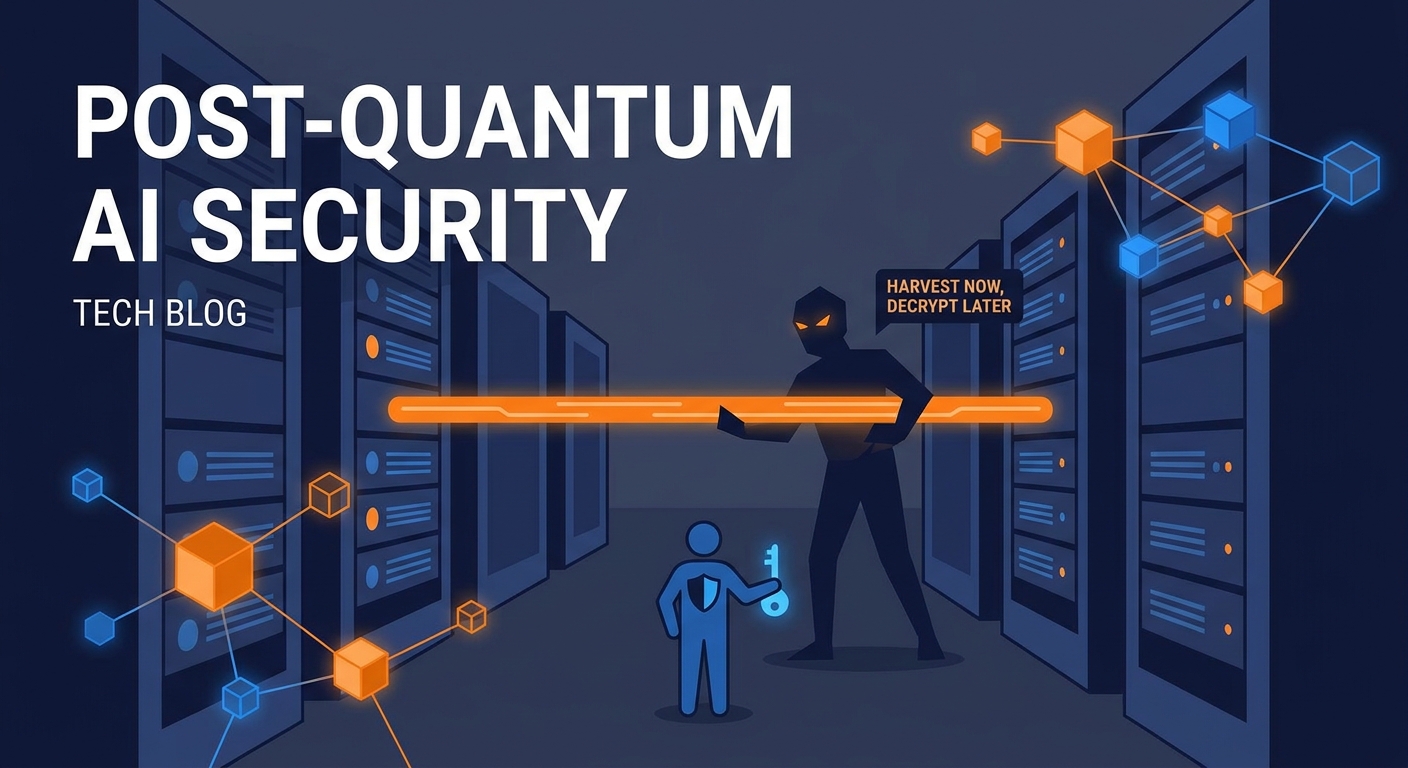
- Future-proofing: Start transitioning your root certificates to pqc now, because "store now, decrypt later" attacks are a real thing hackers are doing today.
The next decade of ai infrastructure is going to be messy, but if we bake this quantum-resistant security into the mcp stack now, we won't be scrambling when the first real quantum computers start knocking on our doors. It’s about building a stack that’s fast, invisible, and smart enough to watch its own back.