Building Quantum-Proof AI Infrastructure: A Step-by-Step Guide for 2026

Your AI infrastructure is leaking. It isn't a buggy line of code or a misconfigured firewall—it’s the math itself. The foundation of the modern internet is rotting, and by 2026, the "Harvest Now, Decrypt Later" (HNDL) threat has graduated from a niche security concern to a C-suite nightmare.
Here’s the reality: adversaries are currently vacuuming up your encrypted traffic. They’re dumping it into massive storage silos, waiting for the day quantum computing hits the maturity required to shatter RSA and ECC standards. If you’re an AI firm, this isn't just a data breach. It’s the exfiltration of your "intellectual crown jewels." Your proprietary weights, your training sets, and your model architectures—the very things that give you a competitive edge—are being harvested.
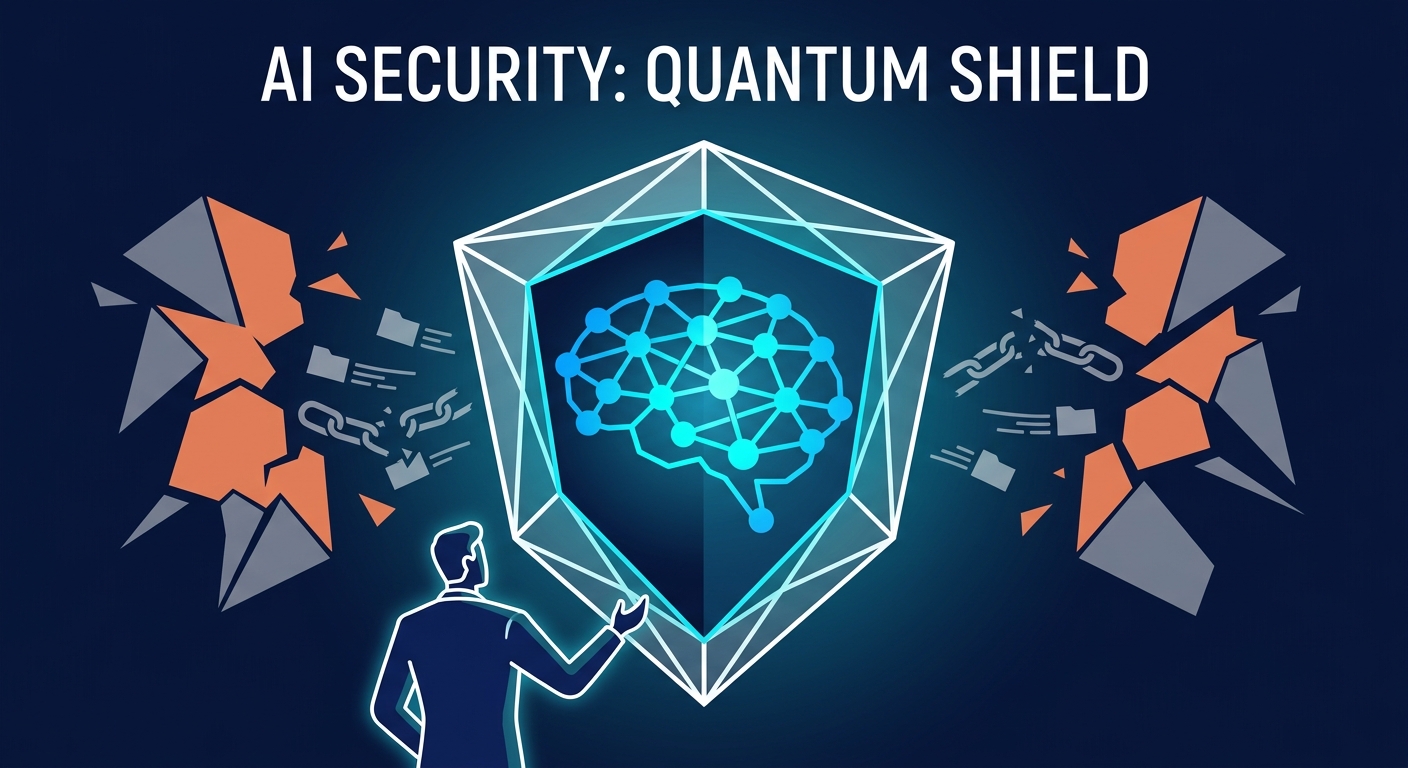
If you aren't baking Post-Quantum Cryptography (PQC) into your stack right now, you’re essentially gift-wrapping your most valuable assets for future adversaries. For a primer on why this is so critical, check out this CISA threat explainer.
Why AI is the Ultimate Target
Standard security is built for transactional noise. Credit card numbers, session tokens, passwords—these lose their value in minutes. But AI? AI is different. The shelf life of a model is measured in years, not hours.
A model trained in 2026 is an expensive, high-stakes asset expected to drive revenue through 2030 and beyond. If a state actor intercepts your traffic today, they don't need to break into your systems in four years. They just wait, then run a quantum-powered decryption routine on the data they’ve been hoarding. It’s a slow-motion heist. Protecting this requires a fundamental shift: you have to move from ephemeral, "good enough" encryption to persistent, quantum-safe protection.
First Steps: Mapping Your "Cryptographic Inventory"
You can’t protect what you can’t see. Most engineers assume their security is managed by cloud providers or standard libraries, but "Shadow Cryptography" is everywhere. Think of hard-coded legacy algorithms buried in custom training scripts or forgotten CI/CD pipelines.
To build your inventory, you have to map every single instance of asymmetric encryption across your pipeline. Look for RSA keys in service-to-service communication, ECC curves in your authentication modules, and static certificates in your container registries. If an algorithm isn't on the NIST-approved list, it’s a liability. Once you’ve mapped these, prioritize them based on data sensitivity and longevity. We’ve broken this down further in our guide to top 5 strategies for post-quantum AI infrastructure security in 2026.
Achieving "Crypto-Agility"
The quantum threat isn't static. The algorithms we trust today might be refined or replaced tomorrow. If you hard-code a single PQC algorithm into your infrastructure, you’re just buying a massive technical debt bill for 2027.
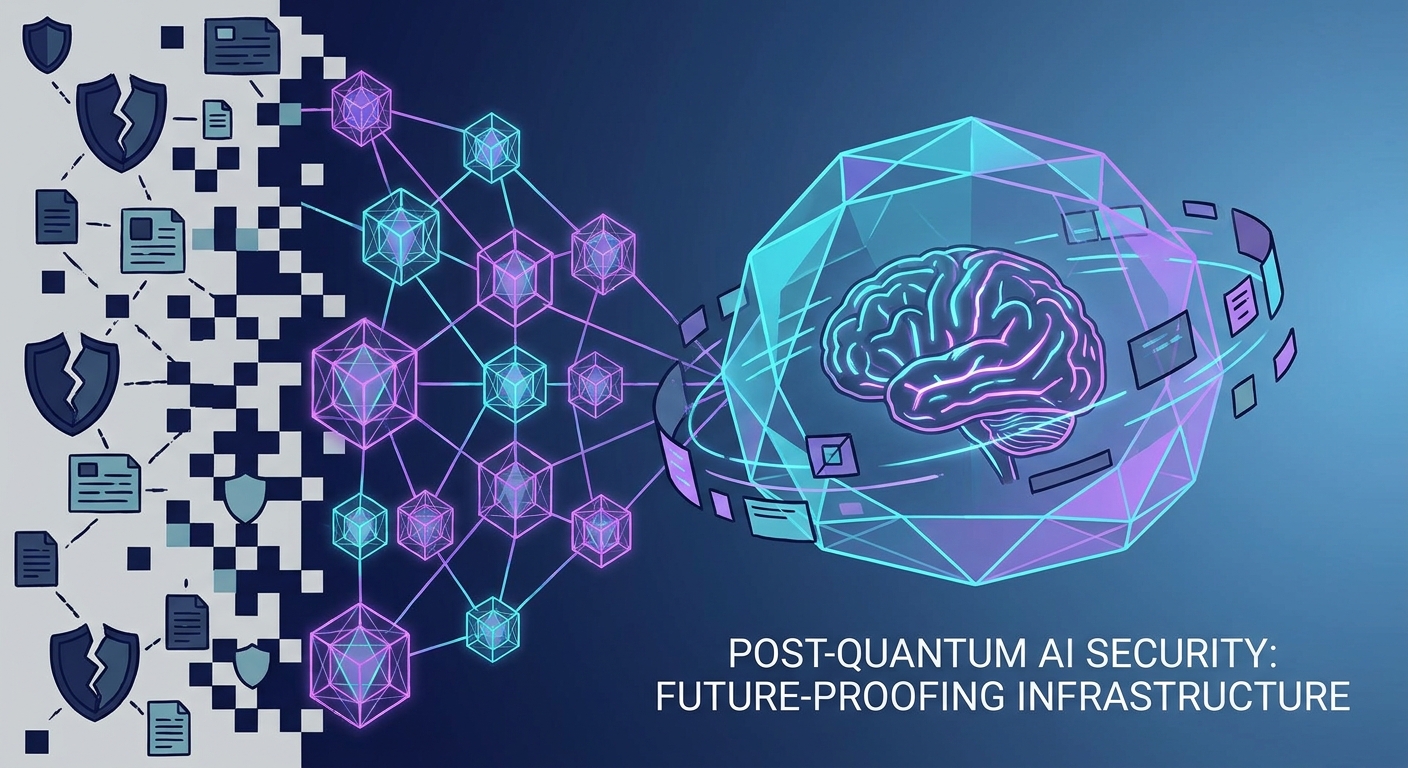
The goal is "Crypto-Agility." This is an architectural shift that decouples your cryptographic implementation from your application logic. You want a hybrid approach. Run your classical algorithms (RSA/ECC) alongside PQC-ready ones like CRYSTALS-Kyber or Dilithium. This keeps your legacy systems talking while shielding your data against the quantum future. Build a middleware layer that negotiates security protocols. That way, when the standard changes—and it will—you can swap out algorithms via a config file rather than tearing down your entire deployment pipeline.
The Regulatory Hammer
Compliance isn't just about ticking boxes anymore; it’s about digital sovereignty. The EU is already moving hard with the NIS2 Directive, demanding stricter controls for providers of large-scale AI. Simultaneously, the NIST Post-Quantum Cryptography standards have become the international gold standard.
If your infrastructure can't prove it’s quantum-resistant, you’re looking at more than just a security risk. You’re looking at regulatory fines and getting locked out of government or enterprise contracts that now mandate proof of quantum-readiness.
Securing the Model Context Protocol (MCP)
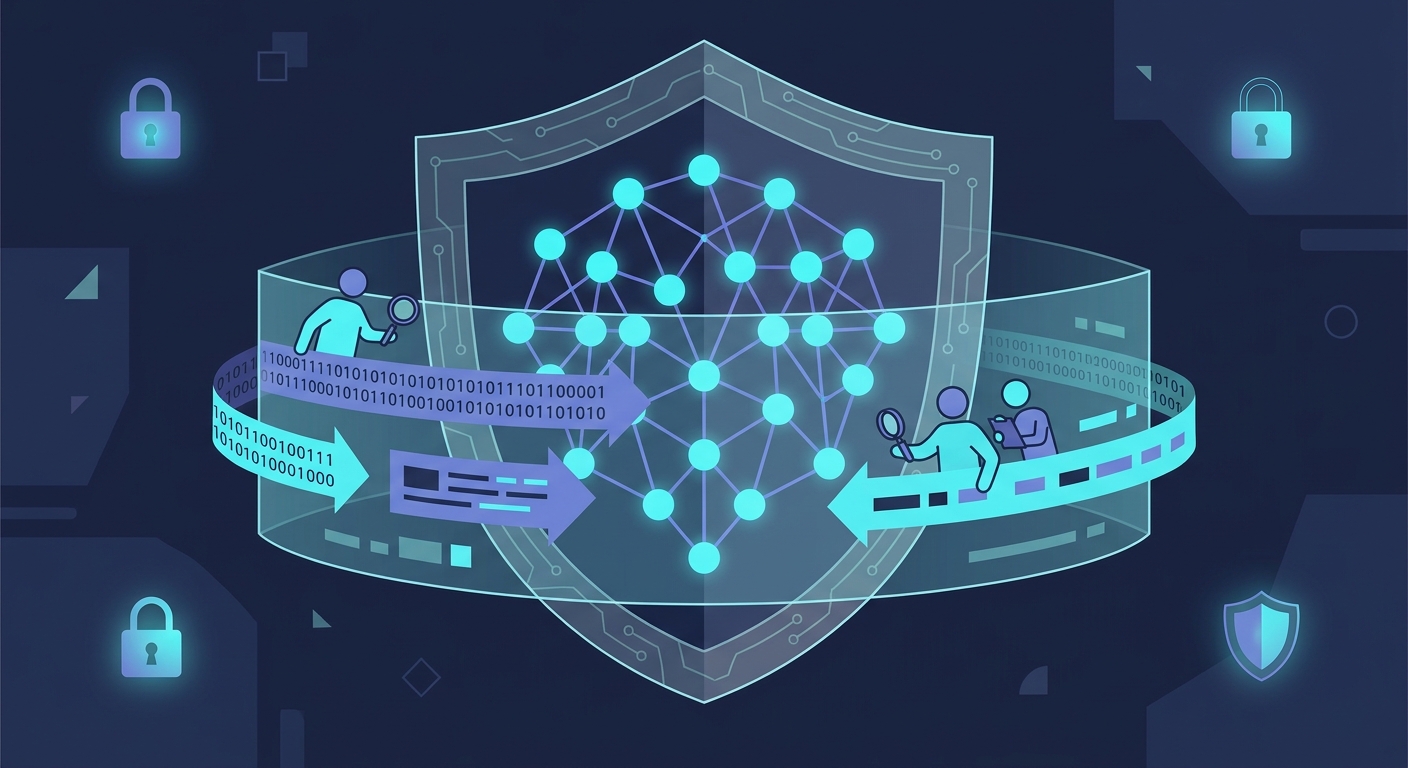
As AI deployments scale, the Model Context Protocol (MCP) has become the go-to for wiring models to external data. But here’s the rub: the handshake between an AI agent and its context provider is a prime target. If that handshake isn't quantum-resistant, an adversary can "sniff" the context. That includes sensitive user prompts and proprietary database queries.
You need to apply PQC to the transport layer of your MCP deployments. It’s the only way to ensure that "context" remains private from the moment it leaves the source to the moment it hits the inference engine. You can check out secure AI deployment solutions to see how these protocols are being integrated into real-world production environments.
The Cost of Doing Nothing
Let’s be blunt: the "Cost of Inaction" is the total loss of your competitive advantage. Imagine it’s 2030. A competitor decrypts your proprietary model—the one you spent years and millions of dollars training. They don't just see the output; they see the "brain." They see how the weights were tuned, which datasets mattered, and where your biases lie. Your market position? Gone.
Don't just guess at the risk. Perform a "Value of Data Over Time" assessment. If your data stays valuable for more than three years, it is already a target for HNDL.
Your 2026 Quantum-Readiness Checklist
- Phase 1: Inventory & Audit. Scan every repo and CI/CD pipeline. Map every usage of asymmetric crypto. Leave nothing behind.
- Phase 2: Prioritize the "Crown Jewels." Tag your training datasets and model weights as "Tier 1." These need PQC encapsulation yesterday.
- Phase 3: Deploy CRYSTALS-Kyber/Dilithium. Start stripping out legacy RSA/ECC in your transport layers and replacing them with NIST-standardized quantum-resistant algorithms.
- Phase 4: Sandbox Testing. Run a pilot in your non-prod environment. Make sure your new crypto-agility layer doesn't tank your model latency or performance.
Frequently Asked Questions
What is the "Harvest Now, Decrypt Later" threat, and why should AI companies care?
Adversaries are capturing encrypted traffic today to decrypt it once quantum computers reach sufficient scale. For AI companies, this means your intellectual property—your training data and model weights—is currently being stolen to be weaponized against you in the future.
How does "crypto-agility" differ from standard security updates?
Standard updates patch vulnerabilities within existing protocols. Crypto-agility refers to an architectural design that allows the underlying cryptographic algorithm (e.g., swapping RSA/ECC for PQC) to be swapped via configuration rather than requiring a complete infrastructure redesign.
Is my AI infrastructure already "quantum-proof" if I use standard SSL/TLS?
No. Standard TLS (1.2/1.3) relies on classical asymmetric algorithms like RSA, DH, and ECDH. These are highly vulnerable to Shor’s algorithm, meaning standard SSL/TLS provides zero protection against quantum-capable adversaries.
What is the deadline for transitioning to post-quantum algorithms?
While specific dates vary by region, the industry expectation is that all mission-critical AI infrastructure must be quantum-resistant by late 2026 to ensure long-term data integrity and regulatory compliance.