Quantum Cyber Security Strategies for Enterprise AI: A Practical Roadmap

TL;DR
- ✓ Understand how Harvest Now Decrypt Later attacks threaten your sensitive enterprise AI data.
- ✓ Learn why the Model Context Protocol increases your attack surface for quantum threats.
- ✓ Discover the urgent need for cryptographic agility to protect long-term proprietary data.
- ✓ Follow a practical roadmap to implement quantum-resistant security standards for your AI.
The biggest threat to your enterprise AI isn’t a hallucinating chatbot or a clever prompt injection. It’s the silent, invisible vacuuming of your encrypted data happening right under your nose.
Welcome to the era of "Harvest Now, Decrypt Later" (SNDL).
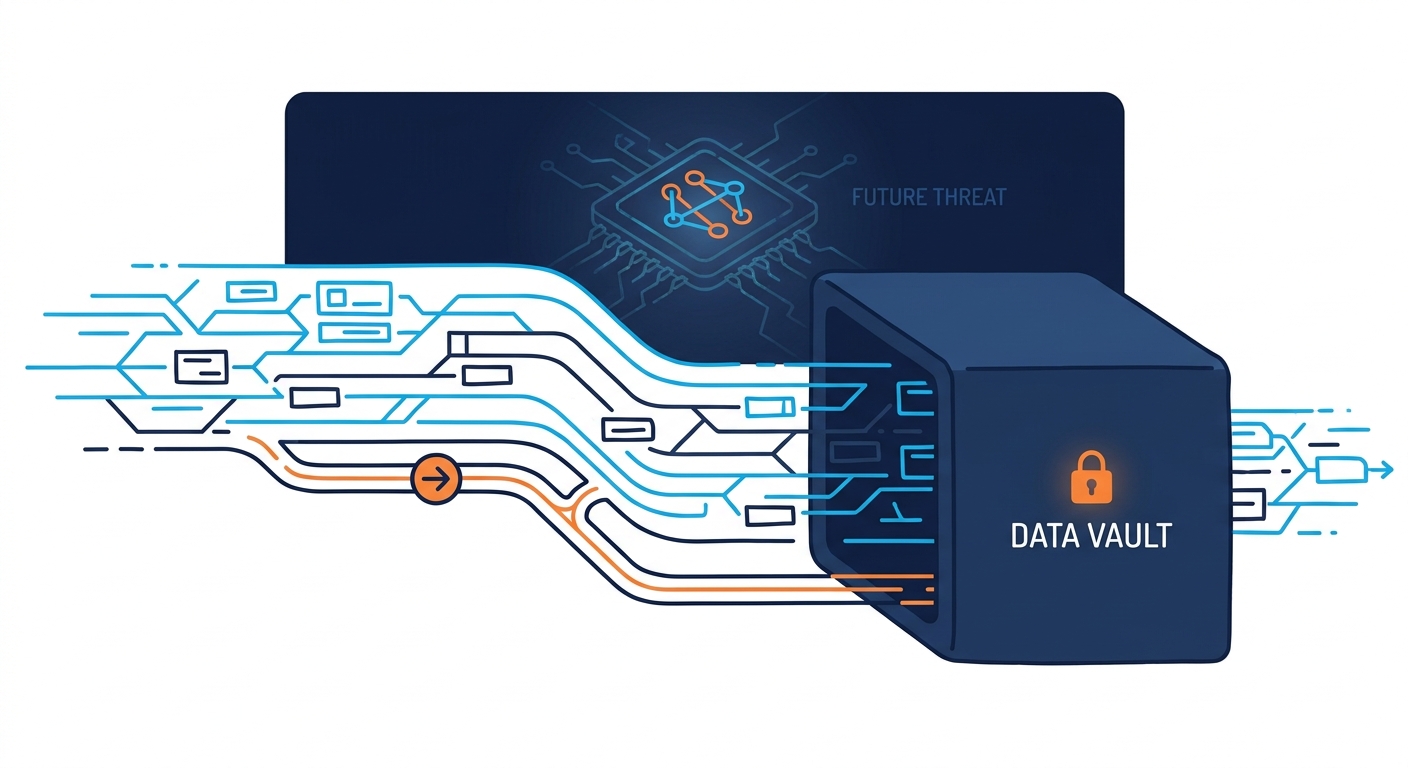
Bad actors are currently siphoning off high-value, encrypted traffic from your AI pipelines. They’re dumping it into massive storage repositories, waiting for the day that cryptographically relevant quantum computers (CRQCs) turn today’s standard RSA and ECC encryption into digital lace. If your data—your proprietary training sets, your weight distributions, or your customers' PII—needs to stay secret for more than five years, consider it already compromised.
Security in the AI era isn't about building a bigger wall. It’s a race toward cryptographic agility and hardening the protocols that let your agents talk to your tools.
Why "Harvest Now, Decrypt Later" is a Boardroom Priority in 2026
For a long time, the quantum threat was just a phantom—a headache for academics at fancy symposia. By 2026, it’s a critical line item for every CISO. Nation-states and organized crime syndicates aren't waiting for quantum hardware to go mainstream. They are building the infrastructure today to capitalize on the "quantum cliff." By capturing your traffic now, they’re essentially buying a lottery ticket on your future secrets.
For AI enterprises, this is lethal. Your training data is the lifeblood of your competitive advantage. Whether it’s proprietary research, sensitive financial models, or private medical data, the shelf-life of this information often exceeds the window of current cryptographic security. As noted in the CISA Quantum Readiness Recommendations, the time to transition to quantum-resistant standards is now. Waiting until a functional quantum computer hits the market isn't a strategy; it’s a guaranteed breach.
How the Model Context Protocol (MCP) Expands the Attack Surface
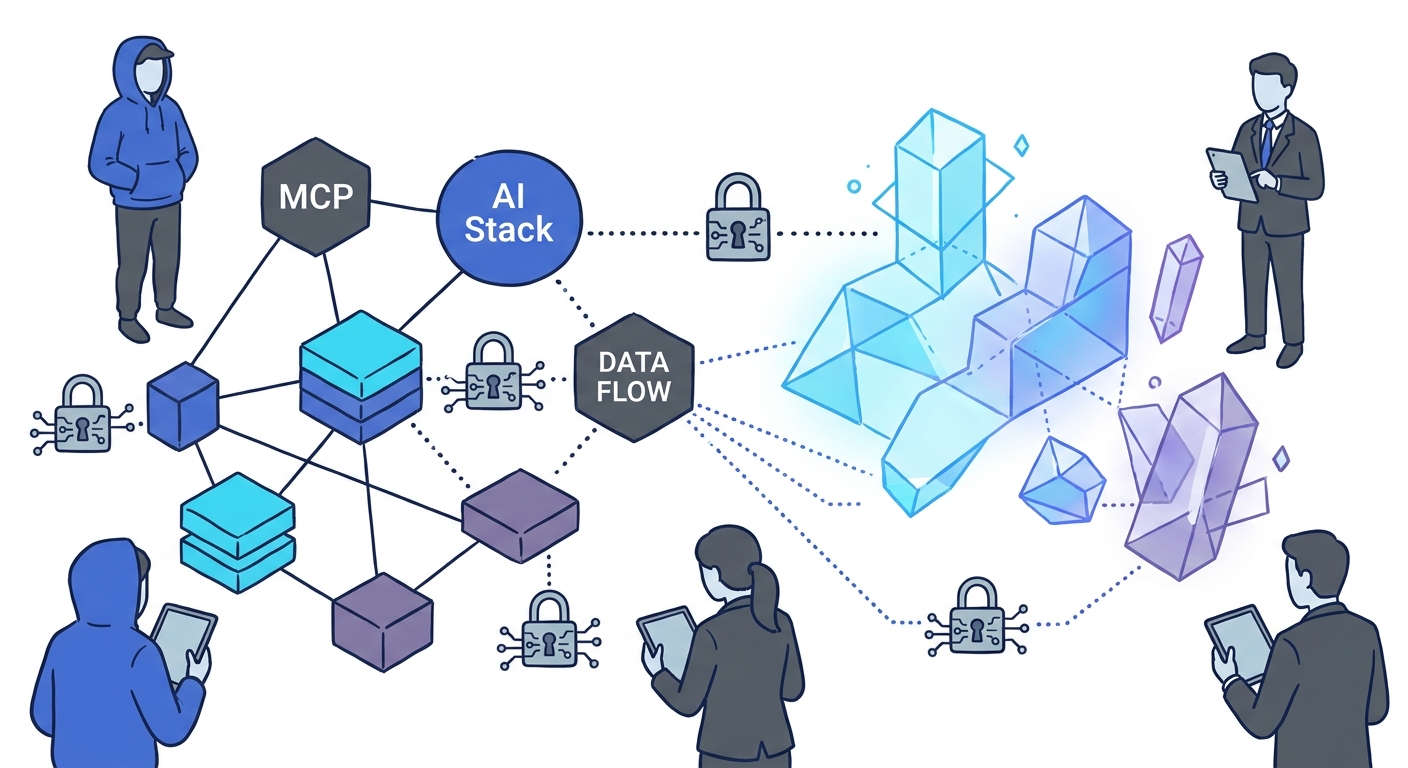
The Model Context Protocol (MCP) has become the connective tissue of the modern enterprise. It provides a standardized way for LLMs to interface with internal databases, APIs, and tools, which has done wonders for development speed. But this convenience comes with a heavy price tag: it creates a standardized, predictable channel for data movement that is a playground for attackers.
When an AI agent requests data from a secure backend via MCP, that request traverses the network. If that transit is secured only by classical TLS—which is vulnerable to quantum decryption—the data is basically harvested in real-time. Standard API security doesn't cut it here. The protocol is designed for fluidity and context, often drifting right past traditional perimeter firewalls that aren't built to inspect these complex, multi-step agent-to-tool handshakes.
As organizations adopt the Model Context Protocol, they need to realize a hard truth: every MCP host is a potential exfiltration point if the underlying transport layer isn't upgraded to support quantum-resistant primitives.
The Four-Phase Roadmap to Quantum-Resistant AI
Transitioning to a quantum-secure architecture isn't a "rip and replace" job. It’s a slow burn—a methodical, phased evolution of your infrastructure.
Phase 1: Mapping Your Data
You can't protect what you can't see. Start by inventorying every single asset that touches your AI agents. Ask yourself: "If this data is decrypted in five years, does it destroy our business model or land us in a regulatory nightmare?" Data with a long shelf-life—legal docs, source code, long-term research—needs to be moved to the front of the line for cryptographic hardening.
Phase 2: Implementing Cryptographic Agility
Stop betting on a single horse. Avoid vendor lock-in and algorithm fragility by pivoting toward a hybrid-cryptography approach. By layering established PQC algorithms—as outlined in the NIST Post-Quantum Cryptography Standardization—alongside your classical encryption, you stay compliant with today’s rules while building a "quantum-proof" buffer.
Think of this as a parachute. If one layer fails, the other holds. For a deeper look at this architecture, refer to our guide on Post-Quantum AI Infrastructure Security: The Definitive Framework.
Phase 3: Hardening MCP with Zero-Trust Architecture
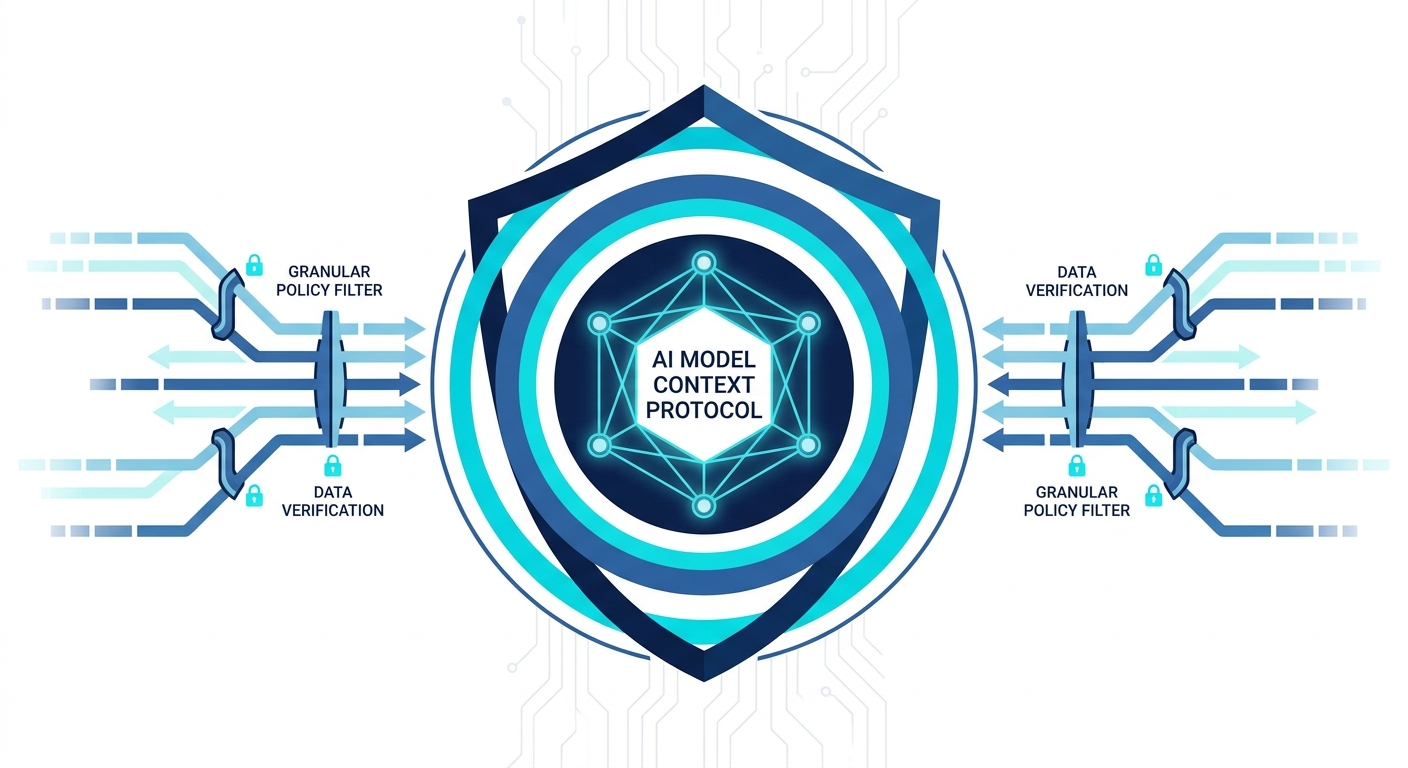
Zero-Trust is the only path forward for agentic AI. Stop trusting traffic just because it’s inside your network. In a "Zero-Trust MCP" model, every agent-to-tool connection must be authenticated and encrypted, regardless of location. Use Policy-as-Code (PaC) to ensure agents only touch the specific data they need for the task at hand. This granular control limits the blast radius if an agent gets compromised. For tactical steps, see our strategies for Securing AI Agents: A Zero-Trust Approach.
Phase 4: AI-Driven Behavioral Analysis
Quantum computers will be used to automate and accelerate attacks, especially when it comes to brute-forcing credentials or identifying patterns in traffic. You have to fight fire with fire. Use AI-driven behavioral analysis to baseline what "normal" agent behavior looks like. If an agent starts requesting data outside of its typical profile or at strange speeds, your security orchestration should trigger an immediate session kill.
Is Your Infrastructure Future-Proof?
Future-proofing isn't about installing a "quantum shield" and walking away. It’s a mindset shift from prevention to resilience. Your security lifecycle needs to be constant, driven by automated monitoring and a commitment to cryptographic agility.
A CISO in 2026 isn't just a firewall manager; they’re the architect of an environment where the rules of the game are shifting under their feet. Resilience means assuming your current defenses will eventually be tested, and ensuring your architecture is flexible enough to pivot before the system breaks.
Frequently Asked Questions
What is the "Harvest Now, Decrypt Later" threat, and why should AI enterprises care?
The "Harvest Now, Decrypt Later" (SNDL) threat involves adversaries intercepting and storing encrypted data today with the expectation that future quantum computers will be able to crack current encryption standards. AI enterprises should care because their training data, proprietary models, and PII are high-value targets that often require secrecy for years, making them prime candidates for this long-term espionage strategy.
Is the Model Context Protocol (MCP) inherently insecure?
No, the Model Context Protocol is a standard for interoperability, not a security protocol in itself. Like any other communication standard, it is as secure as the implementation surrounding it. To make it secure, you must enforce robust TLS 1.3+ with PQC-capable ciphers and implement granular, policy-based access control (PBAC) to ensure agents only access authorized data.
Can I achieve quantum-resistant security without replacing all my infrastructure?
Yes. By adopting a hybrid-cryptography approach, you can layer post-quantum algorithms on top of your existing classical infrastructure. This allows you to maintain current compliance and performance levels while simultaneously wrapping your data in a layer of protection that quantum computers cannot easily penetrate.
How does Zero-Trust apply to AI Agents specifically?
Zero-Trust for AI agents shifts the security focus from identity-based network access to task-based authorization. Instead of trusting an agent because it is "inside" the network, every request is validated in real-time based on the context of the task, the agent's identity, and the sensitivity of the requested data, ensuring that access is always least-privileged and ephemeral.