DuoKey Launches Quantum Risk Scoring to Prioritize Enterprise Post-Quantum Cryptography Migration


TL;DR
- DuoKey debuts Quantum Risk Score (QRS) for enterprise cryptographic health assessment.
- The tool uses a 0-100 scale to quantify exposure to quantum-enabled decryption.
- QRS provides non-invasive analysis without requiring deep internal system access.
- Deliverables include a cryptographic inventory and a 36-month migration roadmap.
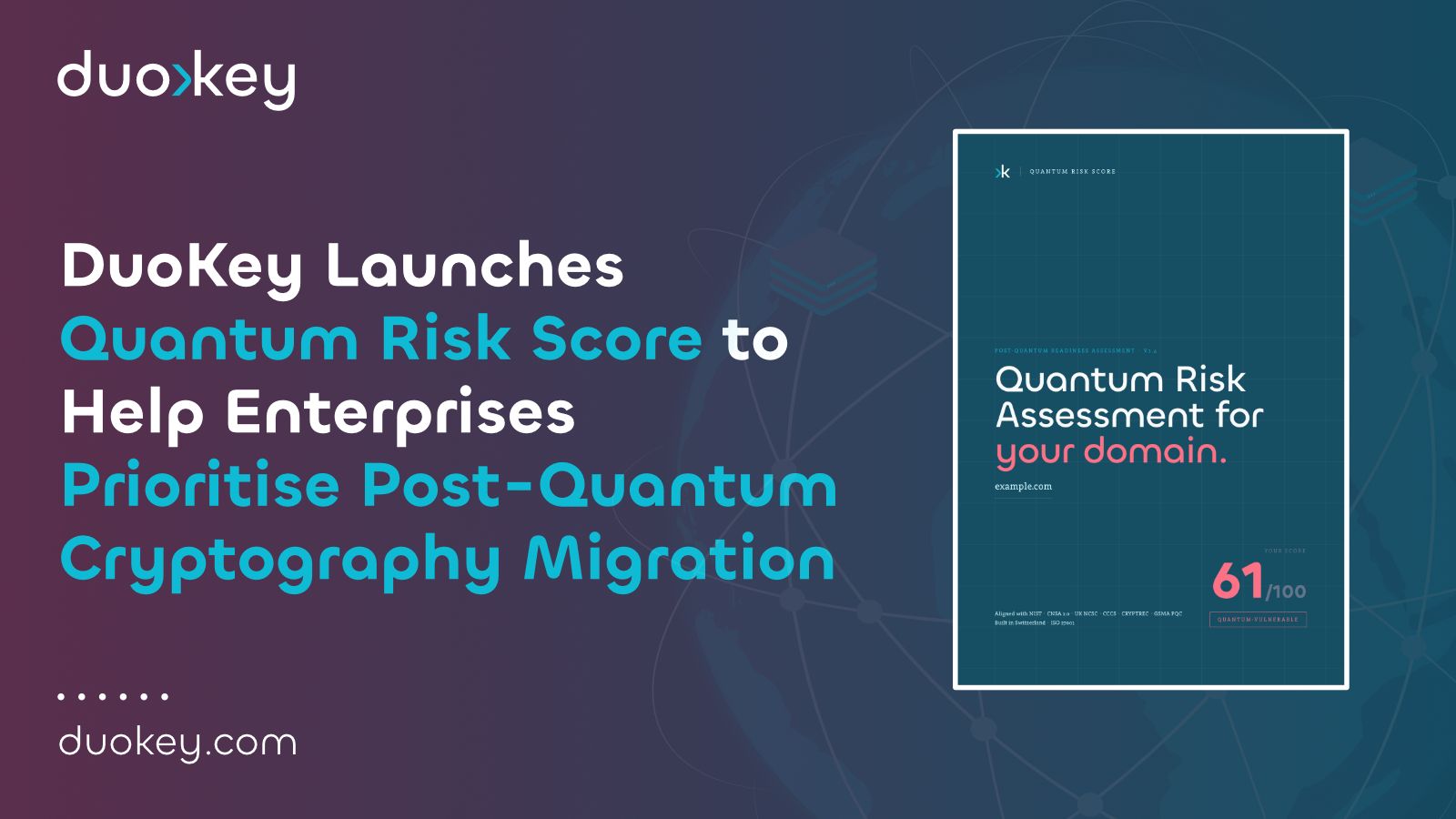
The quantum threat isn’t a distant sci-fi scenario anymore; it’s a looming deadline. As quantum computing matures, the encryption standards that currently hold the internet together—RSA and ECC—are looking less like fortresses and more like paper walls. To help companies stop guessing and start preparing, DuoKey has officially rolled out its "Quantum Risk Score" (QRS). Debuted at VivaTech Paris, this diagnostic tool is designed to cut through the noise and give enterprises a concrete way to measure their exposure to quantum-enabled decryption.
The Scorecard for a Quantum World
Think of the QRS as a credit score for your cryptographic health. It operates on a simple 0-100 scale, stripping away the technical jargon to provide a single, quantifiable metric. For C-suite executives and security teams, this is the difference between saying "we need to upgrade eventually" and "we have a specific, measurable vulnerability that needs fixing by Tuesday." By pinpointing exactly where an infrastructure is leaning on outdated protocols, the tool provides a roadmap for the transition to quantum-resistant algorithms.
How It Works: No Invasive Surgery Required
One of the biggest hurdles in security auditing is the sheer friction of getting started. Who wants to invite a third party to tear apart their internal systems just to get a baseline? DuoKey has sidestepped this by designing the QRS to function without deep, invasive access. Instead, the platform analyzes publicly observable signals to gauge an enterprise’s cryptographic maturity. It’s a "look before you leap" approach that lets security leaders establish a baseline risk profile without the heavy lifting of a full-scale internal audit, as highlighted in recent coverage of the DuoKey Quantum Readiness Score.
The deliverables are designed to be actionable, not just theoretical:
- A 0-100 Readiness Index: A bottom-line number that tells you exactly where you stand.
- Cryptographic Inventory: A breakdown of the assets currently sitting on the "vulnerable" list.
- 36-Month Migration Roadmap: A structured, multi-year plan that treats the transition as a marathon, not a sprint.
- Board-Ready Reporting: Executive summaries that translate technical risk into the kind of language that gets budgets approved.
Playing by the Rules
The regulatory landscape is shifting under our feet. With major cybersecurity authorities setting firm deadlines, "optional" upgrades are quickly becoming mandatory compliance requirements. The DuoKey tool is built to keep these migration efforts in lockstep with international mandates, ensuring that companies aren't just securing their data, but also checking the boxes required by global regulators.
The pressure is mounting, and the timelines are becoming increasingly rigid:
| Standard/Authority | Milestone |
|---|---|
| NSA CNSA 2.0 | Mandate takes effect in 2027 |
| NIST | Deprecation of RSA-2048 and ECDSA set for 2030 |
The assessment incorporates requirements from a "who’s who" of international security, including the National Institute of Standards and Technology (NIST), the Commercial National Security Algorithm Suite (CNSA 2.0), the UK’s National Cyber Security Centre (NCSC), France’s ANSSI, and Germany’s BSI.
Moving from Panic to Planning
As noted by The Qubit Report, the core issue isn't just that quantum computers are coming—it’s that they’ll make today’s standard encryption look like a locked door with no wall attached. By providing an actionable score, DuoKey is helping organizations move past the "what if" stage and into the "how to" phase of remediation.
For those ready to see where they stand, the assessment is accessible via the PQC scan portal. It’s a systematic way to start replacing legacy systems with quantum-resistant alternatives before the threat matures into a crisis.
Ultimately, the goal of the Quantum Risk Score is to provide a diagnostic bridge. As we inch closer to 2027 and the full weight of CNSA 2.0 comes into play, tools like this will likely define how enterprises allocate their technical resources. It’s about being proactive in an era where the only alternative is playing catch-up with a technology that doesn't wait for anyone.