AI-Driven Shifts in Operational Technology Architecture Force Urgent Reevaluation of Industrial Zero Trust Security

TL;DR
- Federal agencies mandate new Zero Trust frameworks specifically for industrial OT environments.
- Standard IT security models risk physical catastrophe and downtime in industrial settings.
- AI-driven threats necessitate a shift from static perimeters to identity-based process integrity.
- The guidance warns against 'rip and replace' methods, favoring incremental, safety-first upgrades.
On April 30, 2026, a coalition of five U.S. federal agencies dropped a mandate that changes the game for industrial security. They’ve made it clear: the way we handle zero-trust in corporate offices doesn’t cut it in the plant. If you try to force-fit standard IT zero-trust frameworks into operational technology (OT) environments, you’re not just risking a data breach—you’re risking a physical catastrophe.
The directive is blunt. Industrial control systems aren't just servers and laptops; they’re the heartbeat of critical infrastructure. They have safety constraints and uptime requirements that make the classic "never trust, always verify" model a potential liability. In a factory, you can’t just pull the plug on a controller because of a suspicious packet. If the process stops, things break. People get hurt.
The Great Divide: IT vs. OT Security
Traditional IT zero-trust is built on the assumption that you can isolate a device the second it acts up. It’s a clean, binary world of "allow" or "deny." But in the industrial world, the primary goal isn't just data privacy—it’s operational continuity.
The federal guidance highlights a massive friction point: the transition to zero-trust in OT must prioritize the integrity of the industrial process above all else. This has become a "do or die" scenario because AI accelerates industrial cyber threats at a terrifying clip. Automated attackers are using AI to map out complex industrial ecosystems, finding the cracks in our legacy defenses before we even know they’re there. Static perimeters are dead; the new mandate is about assuming a breach while keeping the machinery humming.
The New Rules of Engagement
The Cybersecurity & Infrastructure Security Agency (CISA) has released specific guidance on adapting Zero Trust principles for operational technology, and it’s a departure from the IT playbook. We’re moving away from blind trust in network segments and toward identity-based controls that actually understand what a real-time process looks like.
| Feature | Traditional IT Zero Trust | Adapted OT Zero Trust |
|---|---|---|
| Primary Goal | Data confidentiality and privacy | Operational safety and availability |
| Response Action | Immediate isolation/disconnect | Fail-safe operation/controlled state |
| Verification | Constant user/device identity | Process integrity and behavioral baseline |
| Latency Tolerance | Moderate to high | Extremely low (real-time) |
Putting Strategy into Practice
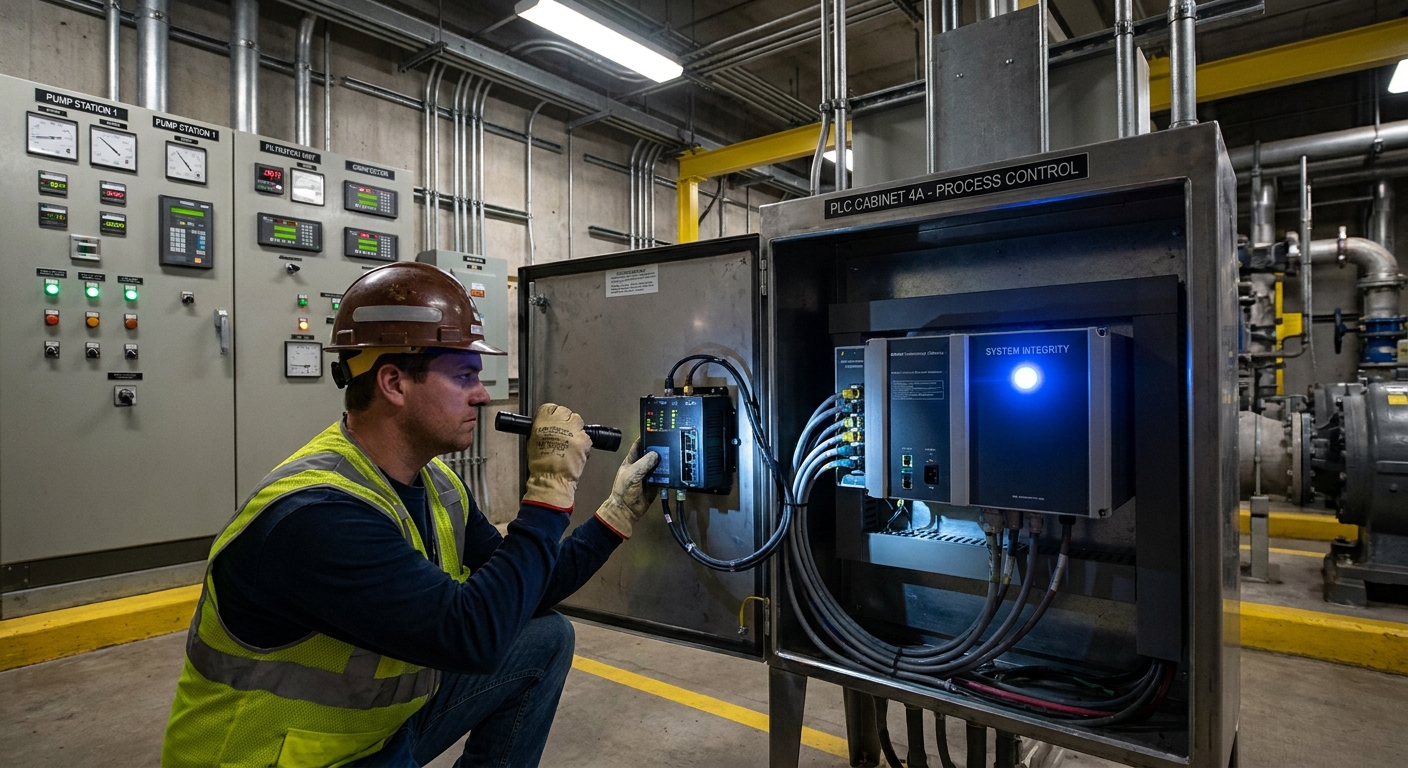
Forget the "rip and replace" mentality. That’s a recipe for disaster. The federal guidance pushes for an incremental approach, weaving security into the existing fabric of your industrial workflows. It’s about mapping communication flows between HMIs, controllers, and management systems until you know every heartbeat of your network.
Here is how you stay ahead of the curve:
- Behavioral Baselining: Stop chasing every anomaly. Establish a strict baseline for what "normal" looks like in your plant so you don't trigger an automated shutdown over a false positive.
- Identity-Centric Access: Most legacy OT hardware doesn't speak the language of modern identity management. You’ll need to implement multi-factor authentication (MFA) that respects the limitations of your older gear.
- Micro-segmentation: Stop relying on a perimeter firewall. You need to wrap your critical control loops in a protective layer that keeps corporate traffic from bleeding into the production environment.
- Safety-First Integration: If your security layer experiences a latency spike, it shouldn't crash the plant. All verification steps must be designed to fail-safe, keeping the process in a controlled, predictable state.
Bridging the Knowledge Gap
The biggest hurdle isn't the technology—it’s the culture. IT security teams often don't understand the physical reality of a plant floor, and OT engineers often view cybersecurity as an unnecessary hurdle to production. This new guidance acts as a Rosetta Stone, forcing both sides to speak the same language.
Collaboration is no longer optional. When you’re dealing with AI-augmented threats, the "air-gap" is a myth. You need the IT team’s security expertise married to the OT team’s domain knowledge. Without that union, you’re just building a digital wall around a physical house that’s already on fire.
The Long Game: Resilience Over Perfection
This push for zero-trust is about national survival. By treating internal traffic with the same suspicion as external traffic, the government is trying to stop lateral movement before an attacker can pivot from a compromised email account to a critical control loop.
Yes, this is going to be expensive. It requires training, new tech, and a massive shift in how we think about industrial architecture. But look at the alternative. As we digitize and connect legacy systems to the cloud, our attack surface is exploding. The cost of inaction isn't just a line item on a balance sheet; it’s the potential for systemic failure.
The message from the federal agencies is clear: zero-trust is a framework, not a product you buy off the shelf. It’s a philosophy of constant, cautious verification tailored to the physics of your specific environment. If you ignore the distinction between IT and OT, you aren't just failing an audit—you’re gambling with the safety and stability of the infrastructure that keeps the lights on.