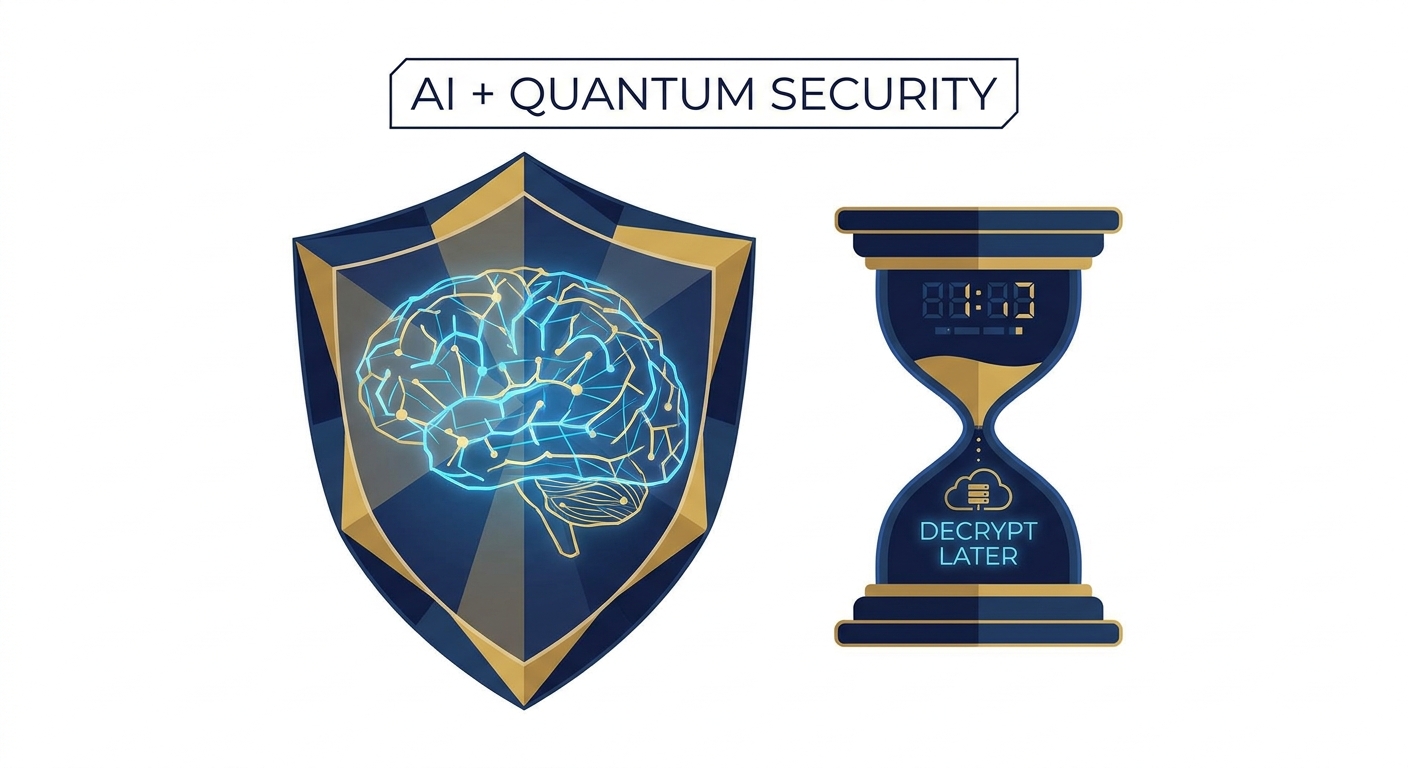
The Future of MCP Security: Why Quantum-Resistant Encryption is No Longer Optional

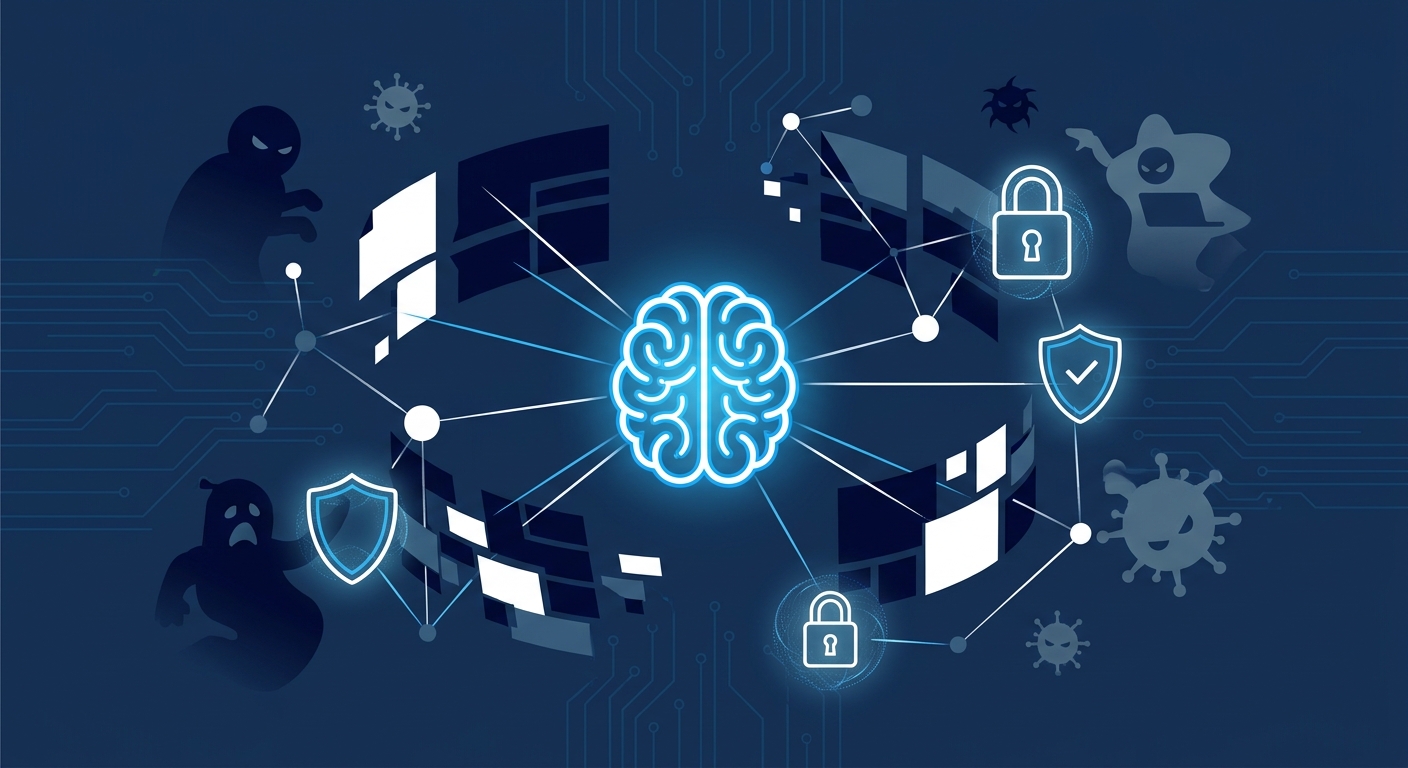
TL;DR
- ✓ MCP creates uncontrolled Shadow IT risks across enterprise AI infrastructure.
- ✓ Current RSA and ECC encryption standards are vulnerable to future quantum computing attacks.
- ✓ Harvest Now Decrypt Later threats expose your current traffic to future decryption risks.
- ✓ Implementing quantum-resistant encryption is essential for securing long-term AI data intelligence.
The Model Context Protocol (MCP) is a revelation. It’s finally given us a standardized way to plug AI agents into the messy, fragmented reality of enterprise data. But there’s a catch. In our rush to turn these agents loose on our databases, file systems, and legacy tools, we’ve accidentally built a massive, invisible attack surface.
We’re calling it "Shadow IT." Only this time, it’s not just a rogue SaaS subscription. It’s an entire layer of automated, high-privilege infrastructure that security teams can’t see, let alone control.
Here’s the reality check: our current cryptographic foundation—the RSA and ECC standards we rely on for everything—is effectively a ticking time bomb. The era of quantum computing is approaching fast. If your AI infrastructure isn't preparing for the post-quantum world right now, you aren't just taking a risk. You are actively inviting the future decryption of your most sensitive corporate intelligence.
Why MCP is the New "Shadow IT"
"Shadow IT" used to mean a marketing manager buying a project management tool on a company credit card. It was annoying, but manageable.
Today, the risk has migrated to the infrastructure layer. Because the Model Context Protocol is designed for seamless, modular connectivity, developers are spinning up MCP servers like they’re ordering takeout. They set them up, bridge them to a high-privileged AI agent, and connect them to a backend system without a second thought.
The lack of visibility is honestly staggering. Most security teams couldn't tell you how many MCP endpoints are active in their environment, which agents have access to which tools, or what kind of data is actually flowing through those tunnels. Without a unified governance layer, you’re flying blind. If you’re currently auditing your stack, take a look at this 2026 AI Security Checklist to see where you stand. If you don’t have a baseline, you’re operating in a massive blind spot that grows larger with every new agentic integration.
The "Harvest Now, Decrypt Later" Problem
There is a dangerous myth in cybersecurity: If my traffic is encrypted today, it’s secure forever.
That is dead wrong. Enter the "Harvest Now, Decrypt Later" (HNDL) threat model.
Sophisticated actors—state-sponsored groups and high-end cyber-criminals—are already intercepting and storing massive volumes of encrypted traffic. They’re grabbing the sensitive context, the tool arguments, and the raw data payloads moving through your MCP tunnels. They can't read it yet. They don't need to.
They are playing the long game. They’re waiting for the moment a cryptographically relevant quantum computer (CRQC) comes online. Once that happens, standard TLS handshakes using RSA or ECC will essentially be an open book. According to the Cloud Security Alliance on AI Infrastructure Risks, the high-value nature of AI-processed information makes it a prime target for this kind of long-term exfiltration. By the time a quantum computer can crack your records, your proprietary source code, customer PII, and internal strategy will be exposed. And at that point? The damage is permanent.
Visualizing the Shift to Quantum-Safe Tunnels
Survival in the quantum age requires moving away from pure classical TLS. We need hybrid architectures. Think of it as wrapping your existing, trusted encryption in a second, quantum-resistant layer. We use algorithms like CRYSTALS-Kyber for key encapsulation. If one layer fails, the other holds.
More Than Just a Tunnel: Securing the "Action" Layer
Securing the tunnel is just the start. Because MCP agents don’t just read data—they execute functions, query databases, and trigger CI/CD pipelines—you have to worry about the integrity of the request itself.
If an attacker manages a man-in-the-middle attack, they aren't just siphoning data. They’re issuing commands. They’re executing unauthorized code on your infrastructure.
This is why digital signatures are non-negotiable. By adopting NIST-approved algorithms like CRYSTALS-Dilithium, you can ensure that every single "action" request is cryptographically signed and verified. It’s "action-in-transit" security. It guarantees that the command received by the MCP server is exactly what the agent intended, blocking any malicious injection into your workflow.
Compliance Alert: If you’re in a regulated industry, treat NIST PQC standards as mandatory. Auditors are already asking for proof of quantum-resiliency in high-privilege system access. Don't be the outlier.
The Performance Reality
The big pushback against PQC is always performance. Algorithms like Kyber and Dilithium are heavier. They have larger key sizes and signature requirements than traditional ECC. If you’re running high-frequency agents that need sub-millisecond latency, you’re going to notice the overhead.
But the industry is catching up fast. We’re seeing hardware acceleration—specialized instructions on new CPUs and dedicated cryptographic co-processors—hitting the market to handle these computations. If you’re building at scale, optimized libraries are no longer optional. For a deeper look at how to balance speed with security, check out our guide on Quantum-Resistant Cryptography for AI.
Pro-Tip: Don't wait for your entire stack to be PQC-ready to start. Begin with your high-value, long-lived data paths. Use hybrid key exchanges to keep your legacy systems happy while you lock down your most critical traffic.
Your 2026 Readiness Roadmap
Migration isn't a one-day project. It’s a phased engineering overhaul. You need your security and infrastructure teams talking to each other, and you need a plan.
Frequently Asked Questions
Why is quantum-resistant encryption necessary for MCP if I don't have a quantum computer?
You need it because of "Harvest Now, Decrypt Later" attacks. Adversaries are currently collecting encrypted traffic. Even if they cannot read it today, they will be able to once quantum computers become available, meaning your data is already at risk of future exposure.
Will quantum-resistant algorithms slow down my AI agents?
There is a performance cost due to larger key and signature sizes, which can impact latency. However, modern hardware acceleration and optimized cryptographic libraries are effectively mitigating these delays, making the security trade-off well worth the negligible impact on user experience.
Does the Model Context Protocol provide built-in quantum security?
No. The Model Context Protocol is an open standard focused on interoperability. Security—including the implementation of encryption, authentication, and quantum-resistant standards—is the sole responsibility of the organizations deploying the protocol.
What is the first step to securing my MCP deployment for 2026?
The first step is a comprehensive discovery phase. You cannot secure what you cannot see. Map every active MCP endpoint in your environment, identify which ones handle sensitive data, and prioritize those for a transition to NIST-approved post-quantum key exchange mechanisms.