How to Secure Model Context Protocol Deployments Against Quantum Attacks

TL;DR
- ✓ Model Context Protocol relies on classical cryptography vulnerable to future quantum computing decryption.
- ✓ Harvest Now Decrypt Later attacks pose a major long-term risk to sensitive agentic data.
- ✓ Current TLS 1.3 implementations cannot withstand Shor’s algorithm used by fault-tolerant quantum machines.
- ✓ Protecting MCP tunnels is essential to prevent exposure of proprietary tool execution logs.
The Model Context Protocol (MCP) is the connective tissue of the modern agentic stack. It’s the standardized bridge letting your LLMs talk to your most sensitive enterprise data. But there’s a catch—a big one. It relies on classical cryptography that’s effectively living on borrowed time.
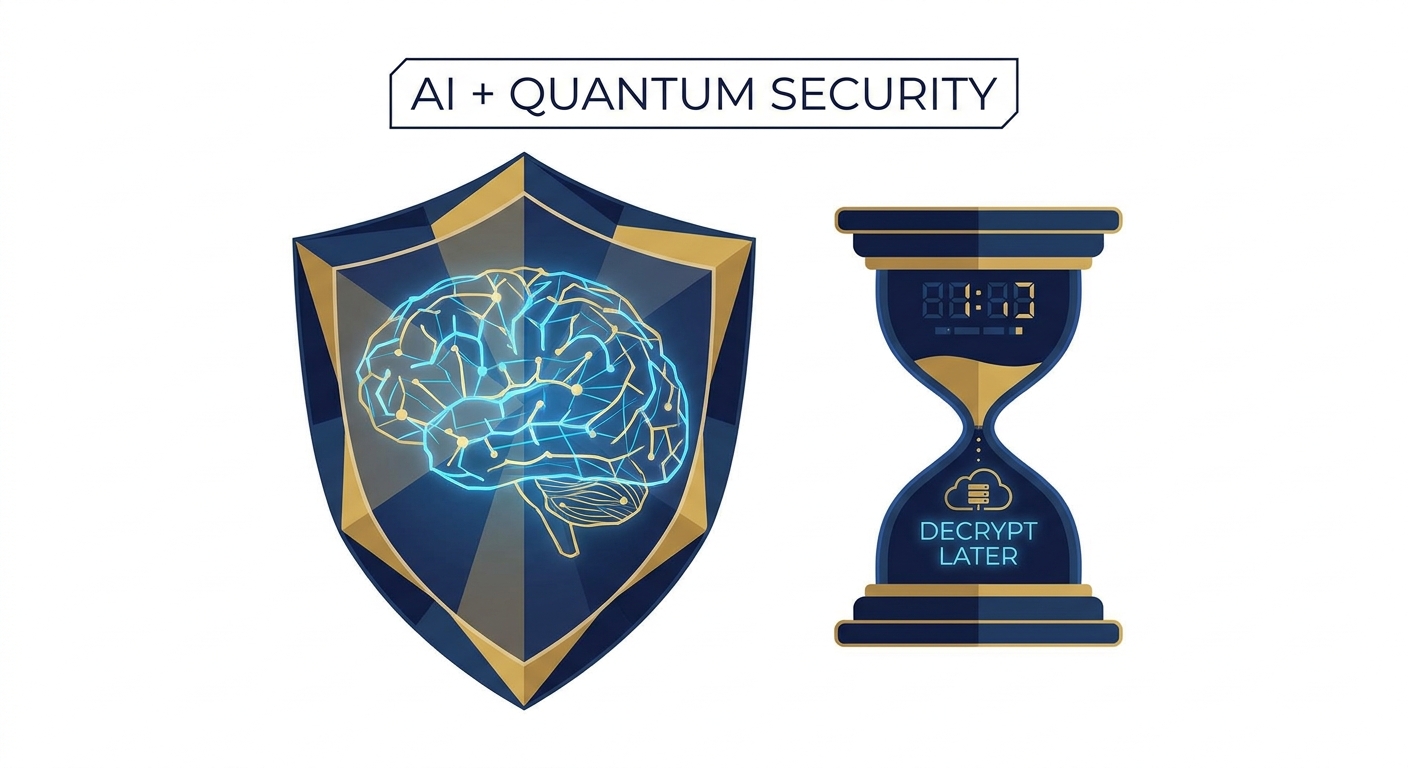
As we look at The 2026 Guide to Post-Quantum AI Infrastructure Security, the threat isn't a flashy, immediate breach. It’s the "Harvest Now, Decrypt Later" (HNDL) paradigm. Think of it like this: bad actors are vacuuming up your encrypted MCP traffic right now. They aren't trying to break it today. They’re banking on the fact that fault-tolerant quantum computers will eventually exist. When they do, they’ll retroactively strip away your security, exposing years of your proprietary tool execution logs and sensitive context.
Why MCP is Uniquely Vulnerable to Quantum Interception
The beauty of MCP is its plug-and-play nature. It’s elegant. It’s efficient. And that’s exactly why it’s a target.
Most MCP implementations lean on standard TLS 1.3 for transport security. Sure, TLS 1.3 is a beast against classical brute-force, but it’s fundamentally allergic to Shor’s algorithm. That algorithm can solve the math problems—integer factorization and discrete logarithms—that keep RSA and Elliptic Curve Cryptography (ECC) alive. Once a quantum computer comes online, your current "secure" tunnels will be about as effective as a screen door on a submarine.
As noted in the Cloud Security Alliance: Quantum Risk to AI, this risk gets worse with "Agentic Orchestration." Since MCP servers act as the gatekeepers between untrusted AI models and sensitive enterprise endpoints, a compromised tunnel doesn't just leak a few database queries. It potentially exposes the entire instruction set and execution history of your agents. If an attacker has those encrypted archives, they don't need to break into your network tomorrow. They just wait for the hardware to catch up, then decrypt your entire vault of AI-driven decision-making.
How Does an HNDL Attack Target MCP Traffic?
The HNDL attack is a long, patient game. It doesn't need real-time exploitation. It’s all about data exfiltration that stays dormant until the computational threshold for decryption is met.
The flow is deceptively simple. Because the traffic flows between standardized endpoints, it’s trivial for an adversary sitting on your network path to mirror the encrypted packets. They store this data in massive, distributed archives. The moment a cryptographically relevant quantum computer goes live, your secrets are laid bare. Everything—your internal operations, privileged tool access, and proprietary data flows—becomes an open book.
What NIST-Standardized Algorithms Should You Implement?
If you want to stop the HNDL threat, you have to move past legacy algorithms. The National Institute of Standards and Technology (NIST) has finalized the specs for post-quantum cryptography (PQC). These are the only standards you should be looking at.
For key encapsulation, FIPS 203 (CRYSTALS-Kyber) is the industry-standard replacement for classical key exchange. It uses a lattice-based approach that actually holds up against quantum-speedup attacks. For digital signatures—which you need to ensure the MCP server you’re talking to is the one you actually intended to talk to—FIPS 204 (CRYSTALS-Dilithium) is the mandatory choice.
Don't just think of this as a compliance box-ticking exercise. This is a fundamental shift in your security posture. Check out the NIST Post-Quantum Cryptography Standards for the specific parameters you need for a compliant deployment. If you want the deep-dive technical breakdown, we’ve covered it in Quantum-Resistant Cryptography for MCP.
How to Migrate Your MCP Deployment Using Hybrid Cryptography
Replacing your entire cryptographic stack overnight is a quick way to break your production environment. Nobody wants that. Instead, use the "Bridge Strategy"—hybrid cryptography. It lets you keep backward compatibility while layering in PQC security. In a hybrid setup, the handshake uses both a classical key (like ECDH) and a post-quantum key (like Kyber). Even if one layer gets compromised, the total security of the tunnel remains intact.
To get this running in your Python or Node.js MCP SDKs, you need to update your TLS configuration suites to prefer hybrid key exchange groups. This ensures modern clients negotiate a quantum-secure tunnel while older ones can fall back to standard encryption, keeping your agentic workflows alive.
Is Zero-Trust the Ultimate Defense Against Quantum-Enabled AI?
Encryption is table stakes, not a silver bullet. If a quantum attacker cracks your transport, your logical security layer—Zero Trust—better be ready to limit the blast radius.
The goal is a "Quantum-secure-by-construction" architecture, as discussed in ArXiv: Quantum-secure-by-construction for Agentic Intelligence. Treat every tool execution request as inherently untrusted. Implement strict attribute-based access control (ABAC) on your MCP servers. An agent should only invoke a tool if it carries a cryptographically signed, short-lived token that’s validated completely independently of the transport layer’s integrity.
Future-Proofing: How to Monitor for Anomalous Agent Behavior?
Static security measures are failing. You need to transition to AI-driven threat detection that actually watches the intent of your agents. Look for quantum-post-processing anomalies—patterns in tool usage that deviate from your established baselines.
If an agent suddenly starts requesting access to weird, disparate datasets or executing tools in a sequence that breaks your policy, your monitoring system should trip an alarm regardless of whether the tunnel looks "secure." By correlating tool execution logs with behavioral analytics, you can spot a compromised agent or an active interception attempt long before the exfiltrated data becomes useful to a quantum adversary.
Practical Migration Roadmap for Security Teams
- Inventory: Find every MCP endpoint in your environment. You can't secure what you can't see. Map the connections between your AI models and the tools they eat.
- Audit: Look at the current TLS configurations of your SDKs. Figure out which endpoints are strictly internal and which face the public internet. The public ones are your highest risk for HNDL interception.
- Deploy: Start rolling out hybrid-cryptographic proxies. Putting a PQC-ready proxy in front of your legacy MCP servers gives you an immediate layer of quantum-resistance without re-engineering your core application code.
- Monitor: Feed your MCP logs into a centralized SIEM. Build specific rules to flag anomalous tool call volumes or strange, non-patterned sequences.
Frequently Asked Questions
Is my current TLS 1.3 implementation quantum-safe?
No. Standard TLS 1.3 is great against classical attacks, but it is wide open to the "Harvest Now, Decrypt Later" threat. You need to update your TLS configuration to use PQC-enabled key exchange suites that combine classical algorithms with NIST-standardized quantum-resistant ones.
What is the "Harvest Now, Decrypt Later" threat and why does it affect AI?
HNDL is a strategy where bad actors intercept and store encrypted traffic, waiting for a quantum computer capable of breaking current encryption to come online. Because AI context contains high-value, long-term enterprise data, these conversations are prime targets for future decryption. Read more in our FAQ: Securing Model Context Protocol: Why Quantum-Resistant Encryption is Non-Negotiable.
Do I need to replace my entire AI infrastructure to be quantum-safe?
Not at all. Hybrid cryptographic models are your best friend here. They allow for incremental upgrades, layering post-quantum algorithms over your existing infrastructure without needing a massive, expensive rip-and-replace of your entire AI stack.
How does MCP specifically change the attack surface for quantum actors?
MCP provides a concentrated, high-value target. By standardizing how AI agents interact with tools and data, it creates a predictable, structured interface. The context provided to these agents—the "crown jewels" of your enterprise—makes the security of the MCP tunnel a top-tier priority.