Beyond Encryption: The New Standards for Quantum-Resistant AI Infrastructure

TL;DR
- ✓ Learn why Harvest Now Decrypt Later attacks threaten your proprietary AI model weights.
- ✓ Understand the critical shift from standard encryption to NIST post-quantum cryptography mandates.
- ✓ Implement ML-KEM and ML-DSA to secure your infrastructure against future quantum computer threats.
- ✓ Discover why current transport layer security is insufficient for protecting long-term sensitive data.
The race to lock down AI infrastructure isn’t some abstract puzzle for math professors anymore. It is the number one headache for every CTO who actually understands the "Harvest Now, Decrypt Later" (HNDL) nightmare. Right now, bad actors are vacuuming up massive amounts of proprietary model weights, training sets, and sensitive inference data. They aren't waiting for a viable quantum computer to show up; they’re building digital warehouses of your most guarded secrets, just waiting for the day their hardware catches up. By 2026, the old way of doing things—standard transport layer security—is officially broken. We need to pivot, and fast. As noted by Palo Alto Networks in their analysis of quantum computing risks, the shift from a "what if" scenario to a "when" reality is forcing a total structural overhaul of how we store and move data.
The HNDL Paradigm: Why Your Data is Already Compromised
The biggest mistake you can make? Thinking encryption is a one-and-done deal. In the HNDL world, an attacker sits between your training clusters and your cloud buckets, quietly siphoning off terabytes of encrypted traffic. They don't need to crack AES-256 today. They just store the ciphertext. When a stable, fault-tolerant quantum computer finally hits the scene—potentially within the next decade—those archives will be cracked open in minutes.
For an AI shop, this is game over. Your model weights are years of R&D and millions in compute costs rolled into one. If those get stolen and stored, your security "shelf-life" is effectively zero. Every single byte of sensitive training data you move today is a liability that grows over time. If you’re ignoring this, you aren’t just failing to protect your data—you’re basically helping thieves steal your intellectual property tomorrow.
NIST PQC Baselines: The New Mandatory Standard
The days of guessing are over. With the finalization of NIST’s Post-Quantum Cryptography standards, we finally have a technical playbook for survival. The transition relies on three core algorithms:
- ML-KEM (FIPS 203): Formally known as CRYSTALS-Kyber. This is our new go-to for key encapsulation. It’s built to laugh at Shor’s algorithm, which makes our current RSA and Elliptic Curve Cryptography (ECC) look like child's play.
- ML-DSA (FIPS 204): CRYSTALS-Dilithium. Think of this as the gold standard for digital signatures, ensuring your models haven't been tampered with.
- SLH-DSA (FIPS 205): Based on Stateless Hash-Based signatures (SPHINCS+). This is your safety net. It relies on hash functions rather than complex math, acting as a vital hedge if someone finds a way to break ML-DSA.
These aren't suggestions. If you want to claim your infrastructure is quantum-resistant, these are your new mandatory baselines. Period.
The Model Context Protocol (MCP) Attack Surface
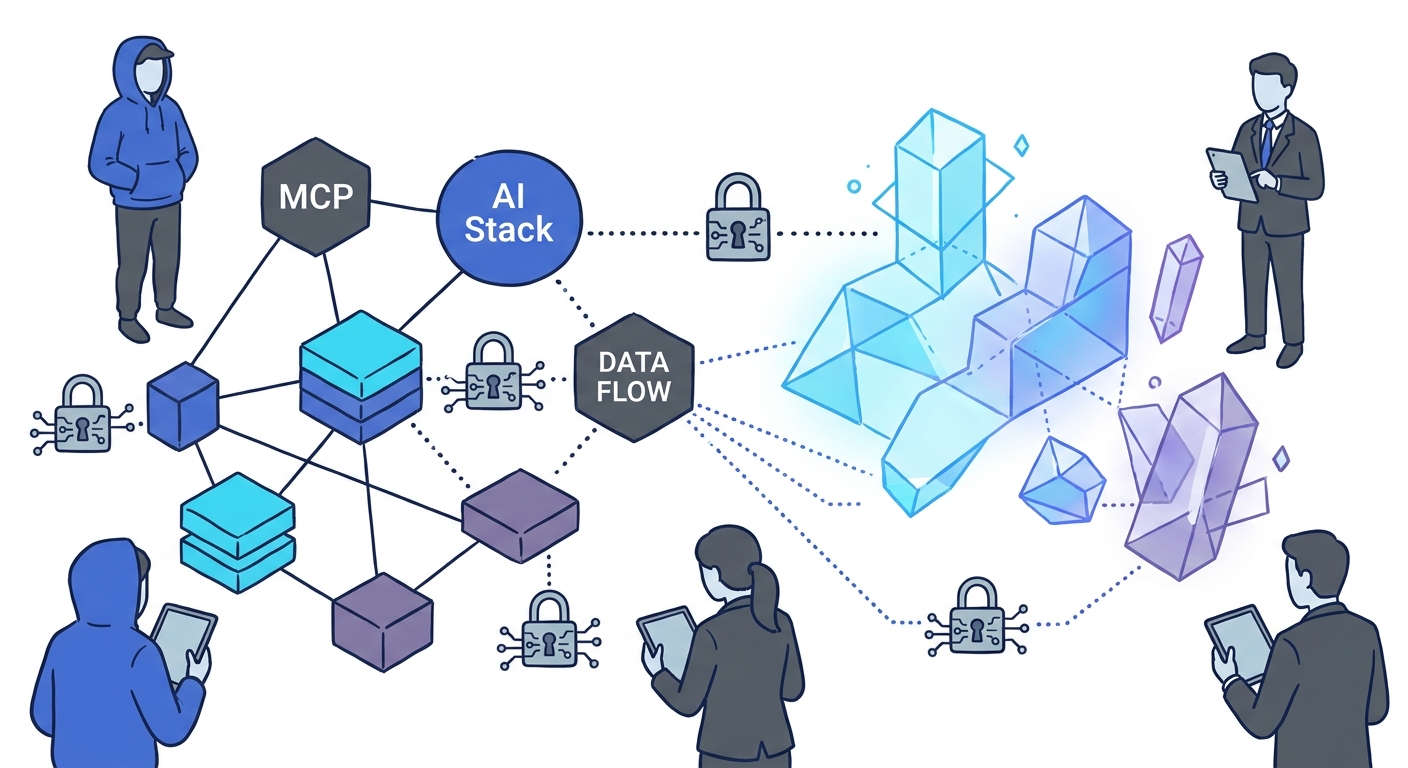
With a 78% adoption rate, the Model Context Protocol (MCP) has become the glue holding the modern AI stack together. But that ubiquity? It’s a massive, distributed vulnerability. MCP links LLMs to databases, tools, and local file systems, but it often operates on a level of implicit trust that is frankly dangerous in a post-quantum world.
As highlighted in this breakdown of emerging security risks with MCP, the protocol is soft. It’s open to metadata poisoning and nasty remote code execution (RCE) attacks. If an attacker can mess with the context window, they can trick an AI agent into handing over database credentials or running malicious code. When you realize these MCP tunnels are often draped in legacy TLS, the risk is double: the data in transit is sitting duck for HNDL, and the endpoints are wide open for injection.
Securing the AI Pipeline: A Hybrid Cryptographic Approach
Let’s be clear: "rip-and-replace" is a recipe for disaster. Tearing down your entire stack to bake in PQC will lead to endless downtime and broken code. The smart way forward? A Hybrid Cryptographic Approach.
Layer your old-school algorithms (RSA/ECC) with PQC heavyweights like ML-KEM. You get the best of both worlds. The classical layer keeps you compliant and compatible with current hardware, while the PQC layer builds an impenetrable wall against future threats. If the classical stuff fails? The PQC layer holds the line.
Implementing Quantum-Resistant Infrastructure in 2026
Switching to a quantum-safe setup is a marathon, not a sprint. It’s about moving from "hope-based security" to a structured, audit-heavy architecture. As you plot your course, keep the 2026 Roadmap for Quantum-Resistant AI Infrastructure close by.
Follow this four-stage lifecycle:
- Audit: Find every point where your models ingest data. Map out your MCP endpoints. You can't protect what you can't see.
- Hybrid Tunneling: Wrap your transport layers in hybrid cryptographic shells. Start with the "crown jewels"—your training data and model weight syncs.
- Runtime Anomaly Detection: Static encryption isn't enough. You need to watch how your agents behave in real-time.
- Continuous Monitoring: Compliance is a moving target. As new holes are found in PQC standards, your pipeline needs to be flexible enough to swap out algorithms without a full rebuild.
Beyond Static Encryption: The Role of AI-Driven Anomaly Detection
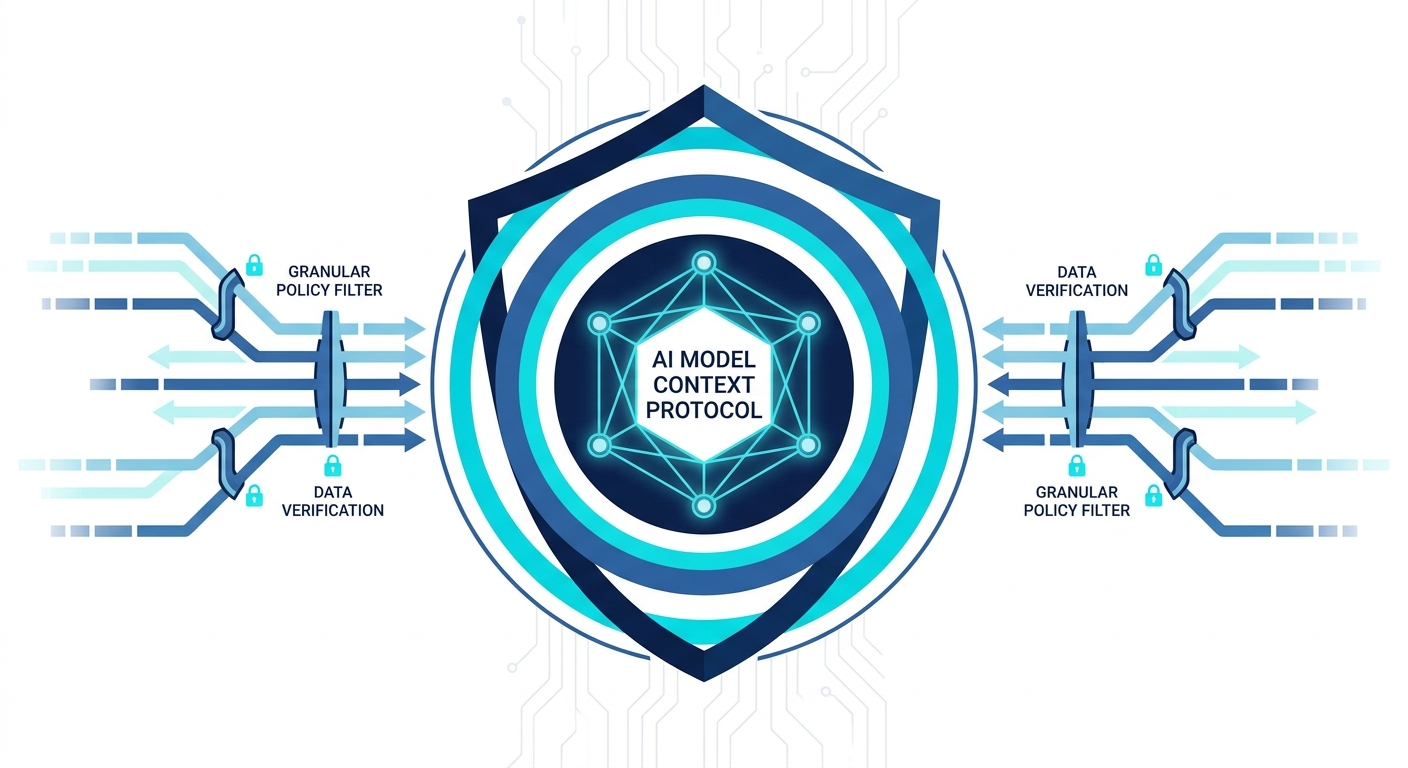
Encryption is just a gatekeeper. In an age where AI agents are autonomous and unpredictable, you need a security layer that actually understands context. By integrating Post-Quantum Key Agreement for Model Context Confidentiality, you ensure the back-and-forth between your agents and their tools remains private.
Even with the best encryption, an attacker might try to forge a signature or inject bad metadata. This is where AI-driven anomaly detection comes in. If you train security models to recognize how your agents should act, you can spot a forgery or a weird instruction in real-time—and kill the process before the agent does something dumb.
Frequently Asked Questions
Does my AI infrastructure need quantum-resistant security today if quantum computers aren't fully here yet?
Yes. The "Harvest Now, Decrypt Later" threat is already active. Data intercepted today is being stored by adversaries specifically to be decrypted in the future. If your data has a shelf-life of more than three to five years, it is already at risk.
What is the biggest risk to my Model Context Protocol (MCP) deployment?
The primary risk is unauthorized access to the context window. An attacker can leverage the MCP to inject malicious instructions into an agent’s workflow, leading to data exfiltration or unauthorized code execution. Securing the MCP tunnel with PQC is the only way to ensure the integrity of the data the model is consuming.
Is it possible to implement quantum-resistant security without redesigning my entire AI stack?
Absolutely. Using hybrid cryptographic wrappers allows you to add a PQC layer to your existing classical encryption without requiring a massive architectural overhaul. This allows for a phased, non-disruptive roll-out that prioritizes your most sensitive data first.
What are the compliance implications of ignoring these new standards?
Regulators are already beginning to view "quantum-safe" data handling as a requirement for data privacy compliance. Ignoring these standards will likely lead to significant legal, financial, and governance liabilities as frameworks like GDPR, HIPAA, and others evolve to mandate long-term data security.
How do I distinguish between "Quantum-Safe" and "Quantum-Resistant" in vendor marketing?
"Quantum-Safe" is often used as a marketing term for any product that claims to be future-proof. "Quantum-Resistant" specifically refers to infrastructure that implements NIST-approved algorithms (like ML-KEM or ML-DSA). Always ask for the specific cryptographic primitives being used; avoid vendors who cannot name the underlying FIPS 203/204/205 standards.