Is Your AI Architecture Quantum-Ready? Addressing Critical Infrastructure Vulnerabilities

TL;DR
- ✓ Encrypted data is currently vulnerable to future Harvest Now Decrypt Later quantum attacks.
- ✓ Standard RSA and ECC encryption will be trivial to break by 2026.
- ✓ AI agents create sprawling attack surfaces that require new quantum-resistant security models.
- ✓ Protecting model weights and proprietary datasets is critical for maintaining your competitive advantage.
- ✓ Enterprises must prioritize post-quantum cryptographic standards to ensure long-term data confidentiality.
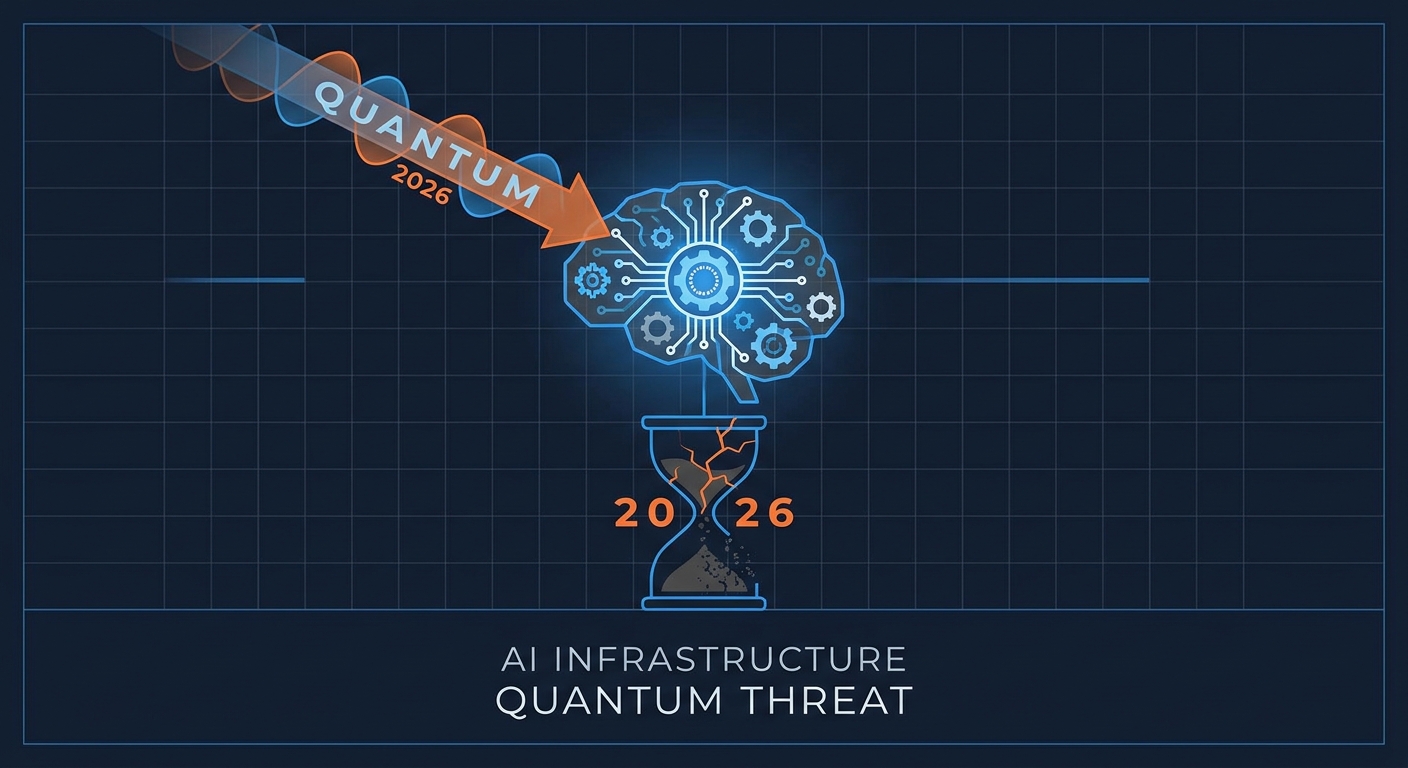
If your enterprise AI strategy relies on current encryption standards to protect training data, proprietary weights, or agentic communication, you’re already operating with an expiration date.
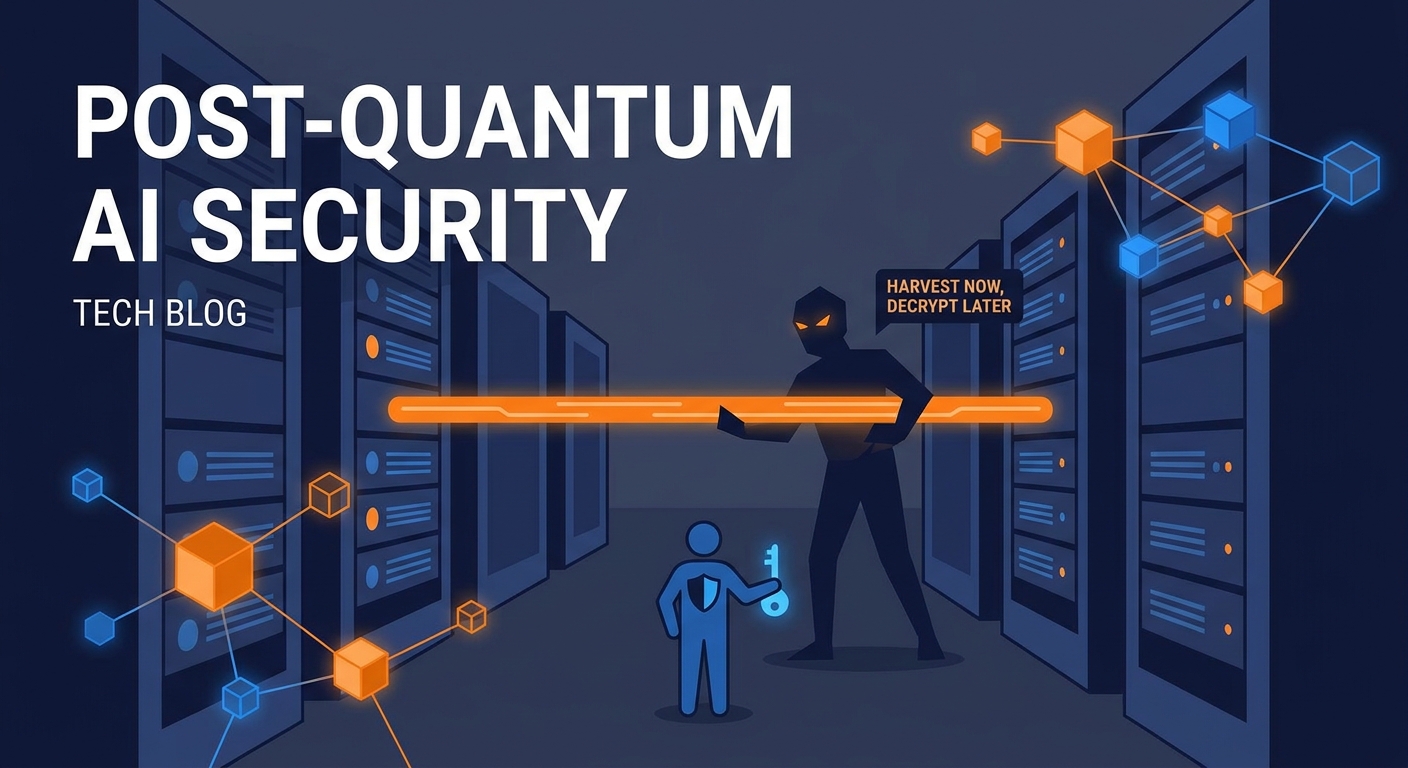
The 2026 deadline for quantum readiness isn’t some abstract warning from academic theorists. It’s a hard, cold, operational reality for any CTO managing sensitive data pipelines. We are witnessing a fundamental shift where the "Harvest Now, Decrypt Later" (HNDL) threat model has turned your encrypted traffic from a secure asset into a ticking time bomb. By intercepting today’s data, state actors and sophisticated adversaries are effectively building a library of high-value intelligence. They’re just waiting for the day a cryptographically relevant quantum computer comes online to unlock your secrets.
Why 2026 is the Deadline for Quantum Readiness
The urgency comes from a shift in the landscape: we aren't just talking about "future threats" anymore. As noted in The Quantum-AGI Convergence research, the collision of quantum computing advancements and the rapid deployment of autonomous AI agents has created a perfect storm for security teams.
If you’re protecting your AI infrastructure with standard RSA or ECC-based TLS, you’re using ciphers that will be trivial for a sufficiently powerful quantum computer to break. The HNDL paradigm forces us to face a hard truth: how long does your data actually need to be secret? If your AI models rely on data that must remain confidential for three, five, or ten years, that data is already compromised. You aren't just defending against today’s hackers. You’re defending against the decryption capabilities of the next decade. Sovereign AI mandates—especially in defense and regulated sectors—are no longer optional. They’re the new baseline for survival.
Why AI Infrastructure is Uniquely Vulnerable
AI infrastructure isn't just another network segment. It’s a concentrated vault of intellectual property and massive, interconnected data gravity. When we look at agentic workflows, we see a sprawling, messy attack surface. Unlike static applications, AI agents are designed to roam—they query disparate databases, synthesize information, and act autonomously.
This fluidity makes the traditional "perimeter" defense model look like a relic of the early 2000s. State actors aren't looking for broad network access anymore; they’re hunting for the specific weights of your LLMs and the proprietary datasets used for fine-tuning. These assets are your competitive advantage, which makes the incentive for interception sky-high. Combine that with the massive volume of data flowing into training pipelines, and you have a target that is both incredibly valuable and, under current standards, alarmingly easy to monitor.
The Vulnerability Spotlight: Is Your Model Context Protocol (MCP) Exposed?
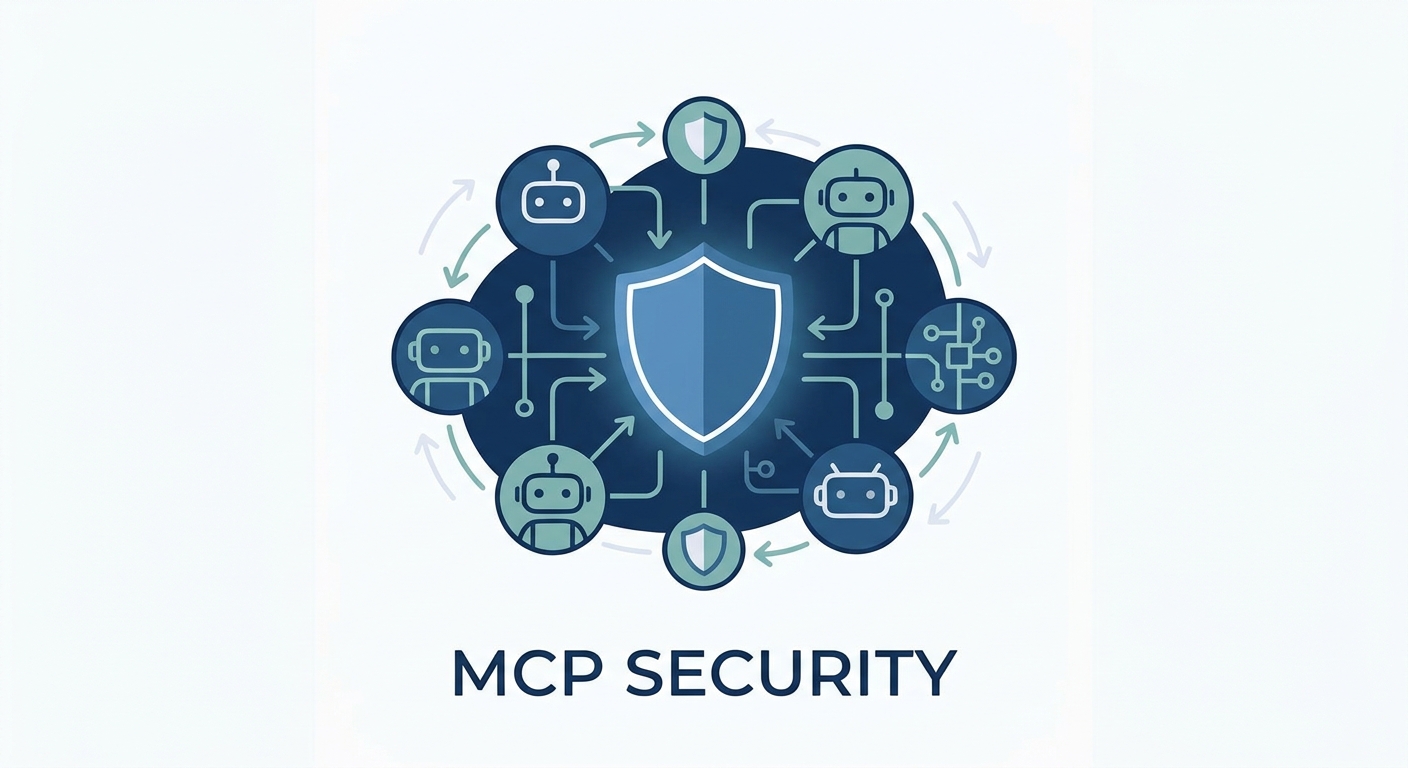
The Model Context Protocol (MCP) is the engine of modern agentic workflows, but it’s also the primary point of failure if your transport layer isn't quantum-hardened. Traditional TLS 1.2 and 1.3 rely on key exchange mechanisms like Diffie-Hellman or Elliptic Curve Cryptography. These rely on the mathematical difficulty of factoring large numbers—the exact problems Shor’s Algorithm is designed to solve.
When your AI agents communicate with data sources via MCP, they perform a handshake that essentially broadcasts the keys used to secure the session. If that traffic is captured, the "keys to the kingdom" are stored in a vault, waiting for the quantum era to unlock them. As we explore in our guide on securing Model Context Protocol against quantum attacks, the lack of native PQC support in many current MCP implementations creates a massive, gaping blind spot in enterprise AI deployments.
The "Harvest Now, Decrypt Later" (HNDL) Threat
The HNDL threat is the silent killer of long-term data privacy. According to Cloud Security Alliance HNDL Research, the cost of storage has plummeted. Adversaries can now afford to mirror entire streams of enterprise data. They don't need to break your encryption today; they only need to record it.
For an AI architect, this means your "secure" data is only as secure as its shelf-life. If your AI's decision-making logic or the training sets used to build its intelligence are intercepted, the damage is retroactive. Once quantum computing reaches maturity, your historical data becomes an open book, revealing business strategies, trade secrets, and PII that you assumed were protected.
How to Achieve Crypto-Agility in Your AI Pipeline
Crypto-agility is your best defense. It’s the architectural philosophy of building systems that aren't married to one specific cryptographic algorithm. Instead of hard-coding RSA or ECC into your transport layers, you design your AI middleware to be modular. This allows for the seamless swapping of algorithms as standards evolve.
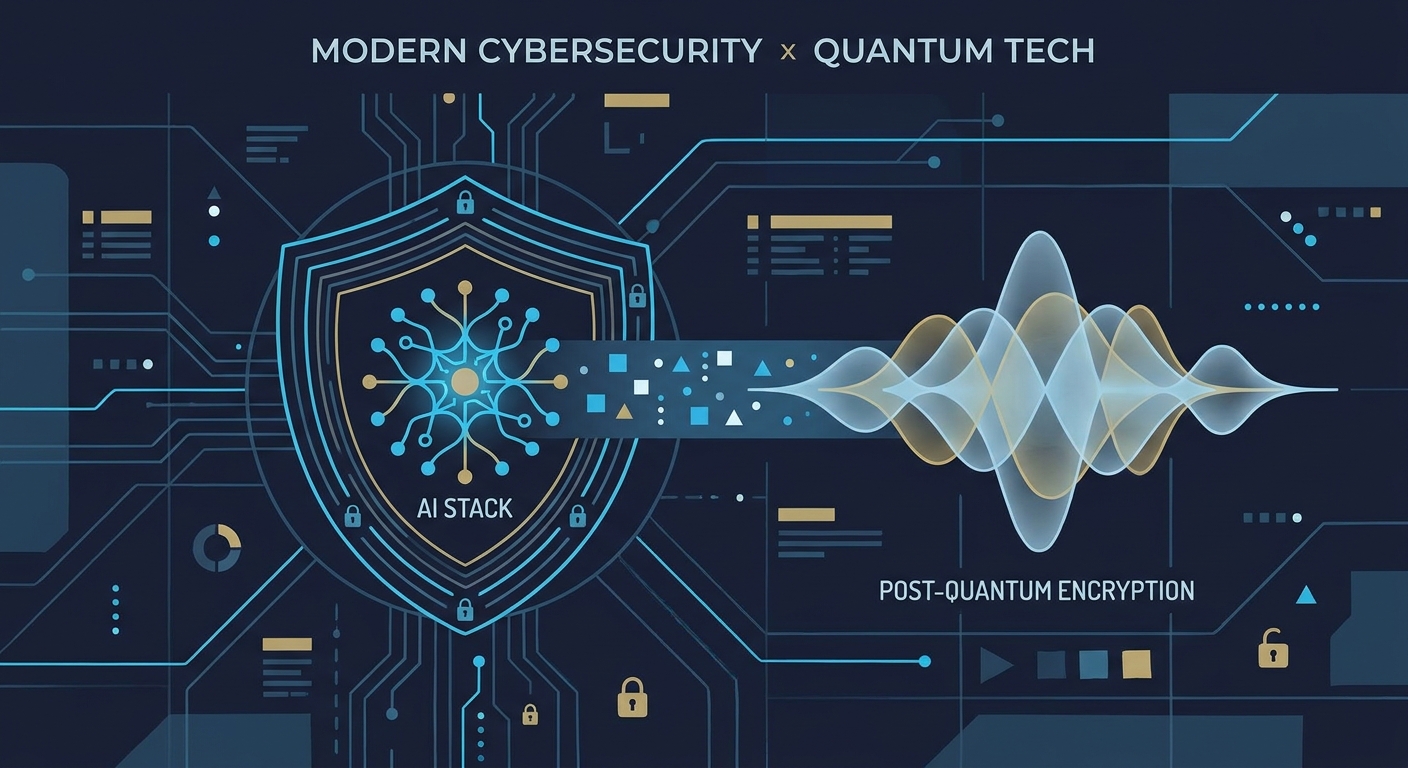
The current gold standard is the transition to Post-Quantum Cryptographic (PQC) algorithms, as outlined by NIST Post-Quantum Cryptography Standardization. However, don't just "rip and replace." The safest path is Hybrid Cryptography. By running a classical algorithm in parallel with a quantum-resistant one (like ML-KEM/Kyber), you ensure that your system stays compliant with current regulations while gaining protection against future threats. If one algorithm is compromised, the other still holds the line.
The 3-Step Roadmap to Quantum-Resilience
1. Inventory and Audit
You can't secure what you haven't mapped. Start by identifying every touchpoint where sensitive AI data is encrypted in transit or at rest. This isn't just your public-facing APIs—look at internal traffic between AI agents, vector databases, and model training clusters. Create a cryptographic bill of materials (CBOM) to see exactly which protocols are in use.
2. Transitioning to PQC Algorithms
Once you have your inventory, prioritize the migration of your most sensitive pipelines—specifically those involving raw training data and proprietary inference outputs—to NIST-approved PQC algorithms. Update your middleware layers, libraries, and service meshes to support hybrid key exchange mechanisms.
3. Governance and Policy Enforcement
Quantum security is an ongoing governance challenge. Standardize your access control policies to ensure that all new AI agents and data connections are required to use quantum-resistant authentication by default. For a deeper look at the operational steps involved, refer to our 2026 Roadmap to Post-Quantum AI Infrastructure Security.
AI-Driven Defense: Fighting Quantum Threats with AI
Ironically, the best way to defend against the threat of quantum decryption is to deploy AI-powered threat detection. While your cryptographic infrastructure is being upgraded, use behavioral analytics to monitor for the signatures of HNDL interception. Adversaries collecting massive amounts of encrypted data often exhibit distinct traffic patterns—like unusual egress volumes or persistent, long-duration connections to unexpected endpoints. By using AI to detect these anomalies in real-time, you can disrupt the interception phase of the HNDL attack before the data is successfully exfiltrated.
Conclusion: Future-Proofing as a Competitive Advantage
Quantum readiness is no longer just a compliance checkbox; it’s a marker of technical maturity. Organizations that proactively secure their AI infrastructure against quantum threats send a clear signal to partners, regulators, and customers: they are built to last. In an era where trust is the most fragile commodity, being quantum-ready is a distinct competitive advantage that ensures your AI-driven innovations remain yours alone, protected from the threats of tomorrow.
Frequently Asked Questions
What is "Harvest Now, Decrypt Later" and why does it matter for AI in 2026?
HNDL is a threat model where adversaries intercept and store encrypted data today, intending to decrypt it once they have access to powerful quantum computers. For AI, this is critical because the data—often proprietary training sets or high-level inference logs—is sensitive for years, making it a prime target for long-term intelligence gathering.
How does the Model Context Protocol (MCP) change the security landscape for enterprise AI?
MCP enables AI agents to autonomously query various data sources. While this enhances productivity, it also expands the attack surface, as every agent-to-data connection becomes a potential interception point. If this transport layer lacks quantum-resistant encryption, the entire agentic pipeline is exposed.
Do I need to replace my entire AI infrastructure to be "quantum-ready"?
No. "Rip and replace" is rarely the answer. Instead, focus on modular upgrades that incorporate crypto-agility. By integrating hybrid cryptographic layers into your existing middleware, you can achieve quantum resistance without re-architecting your entire stack.
What does "crypto-agility" mean in the context of post-quantum security?
Crypto-agility is the capability to update or switch cryptographic algorithms within a system without requiring a total redesign. It allows organizations to swap vulnerable classical ciphers for PQC-compliant ones as new standards emerge, ensuring long-term resilience.
How can I verify if my current encryption is quantum-resistant?
Start by auditing your TLS configurations to see if they support PQC-ready key exchange ciphers. If your infrastructure only supports classical RSA or ECC, it is not quantum-resistant. You should specifically look for support for NIST-approved PQC algorithms like ML-KEM (Kyber) in your service mesh and API gateways.