What Is Post-Quantum AI Infrastructure Security and How Does It Protect MCP?

TL;DR
- ✓ Quantum computing threatens classical encryption used in current AI agent connections.
- ✓ Harvest Now Decrypt Later attacks expose your future data to quantum-enabled theft.
- ✓ The Model Context Protocol requires upgraded security to prevent quantum-based interception.
- ✓ Implementing post-quantum cryptographic standards is essential for long-term AI data privacy.
The AI revolution is moving fast, but there’s a quiet, existential threat looming over your infrastructure. It’s not a bug in your code or a rogue agent. It’s the math. Specifically, the classical encryption securing your Model Context Protocol (MCP) connections—the very stuff that keeps your proprietary data private.
Right now, your AI agents are chatting across your network, protected by encryption that was considered "unbreakable" twenty years ago. But the ground is shifting. Quantum computing isn't just an academic exercise anymore; it’s a looming wrecking ball for the cryptographic locks currently holding the internet together. If you’re building an agentic ecosystem, you aren't just protecting against today’s hackers. You’re protecting against a future adversary who will have the power to turn your current encrypted traffic into an open book.
The "Harvest Now, Decrypt Later" Reality: Why AI Security Can’t Wait for Q-Day
There’s a dangerous myth floating around IT departments: "Q-Day"—the moment a quantum computer actually breaks modern encryption—is a decade away, so why worry now?
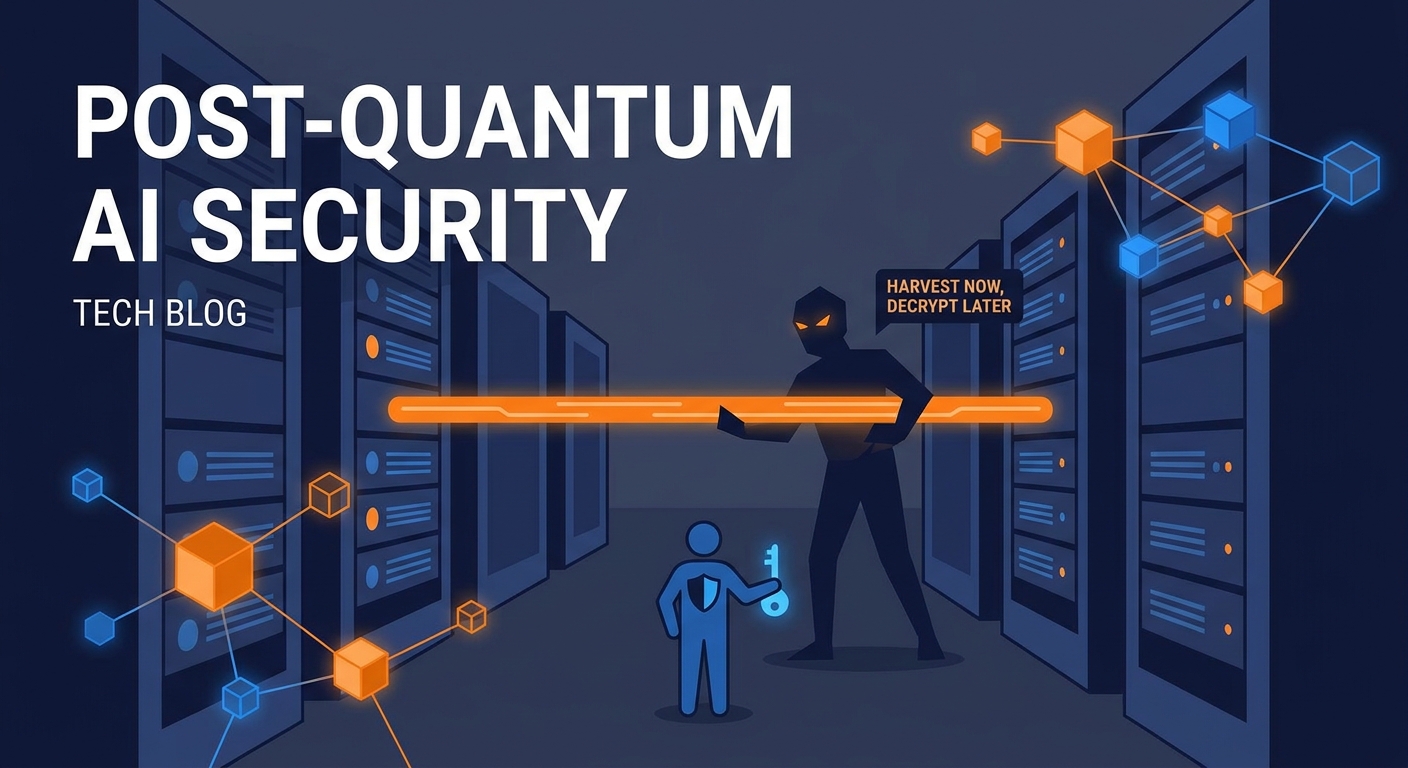
Here’s the cold, hard truth: the threat is already here. It’s called "Harvest Now, Decrypt Later" (HNDL). Sophisticated state actors and organized crime aren't waiting for quantum hardware to mature. They are intercepting and storing massive volumes of encrypted traffic right now. They can't read it today, but they don't have to. They are waiting for the day they can plug that data into a quantum processor and unlock years of your company’s secrets.
For AI, this is a nightmare scenario. Think about what’s flowing through your MCP connections. It’s not just static data. It’s the "thought process" of your business: proprietary codebases, strategic planning documents, and the API keys that grant your agents access to your most sensitive tools. If an attacker captures this traffic today, they aren't just stealing a snapshot; they are building a library of your future intelligence. By the time quantum hardware catches up, that data might be old, but the damage to your competitive edge will be permanent.
What is the Model Context Protocol (MCP) and Where are the Vulnerabilities?
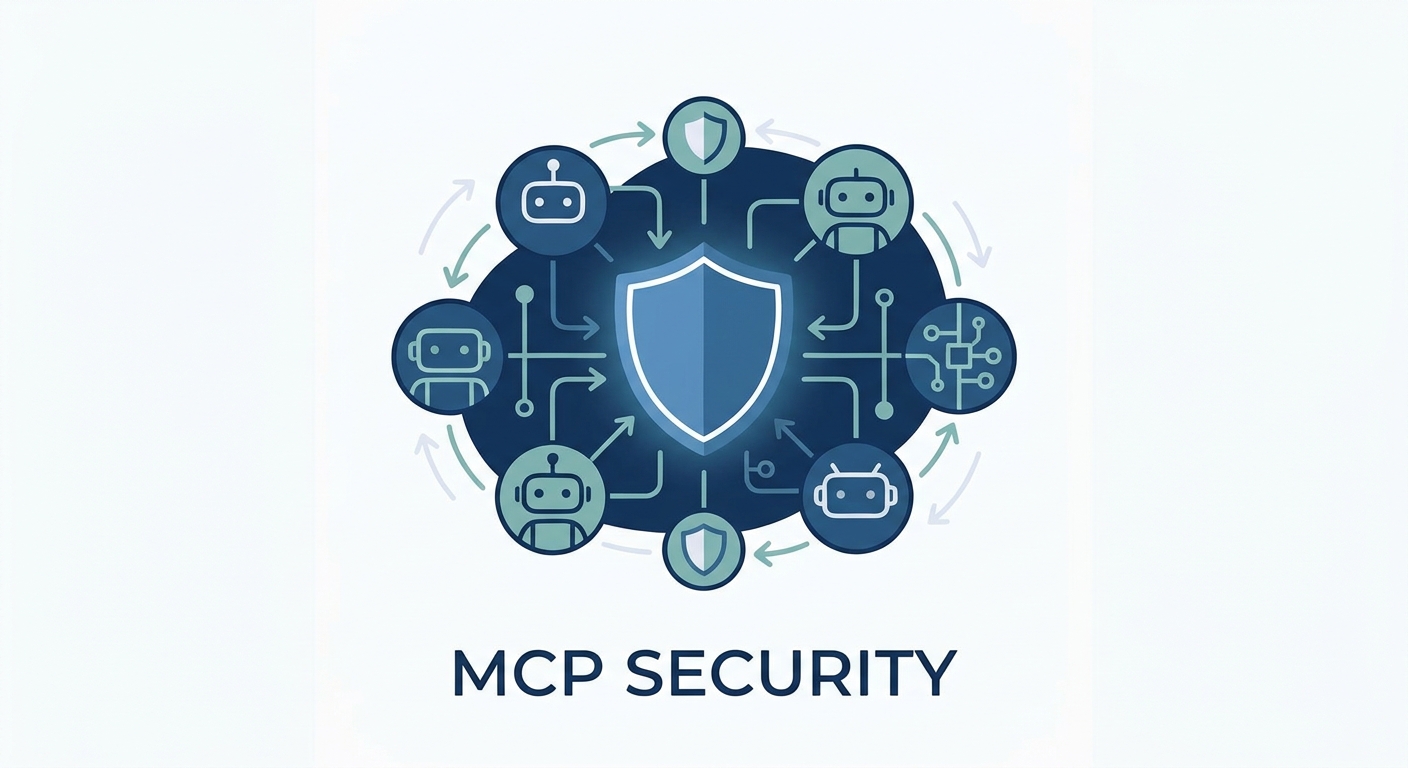
The Model Context Protocol (MCP) is the "connective tissue" of the modern agentic stack. It’s the standard that lets your LLM talk to local databases, file systems, and internal tools. It’s the bridge between "thinking" and "doing."
But that bridge is a massive attack surface.
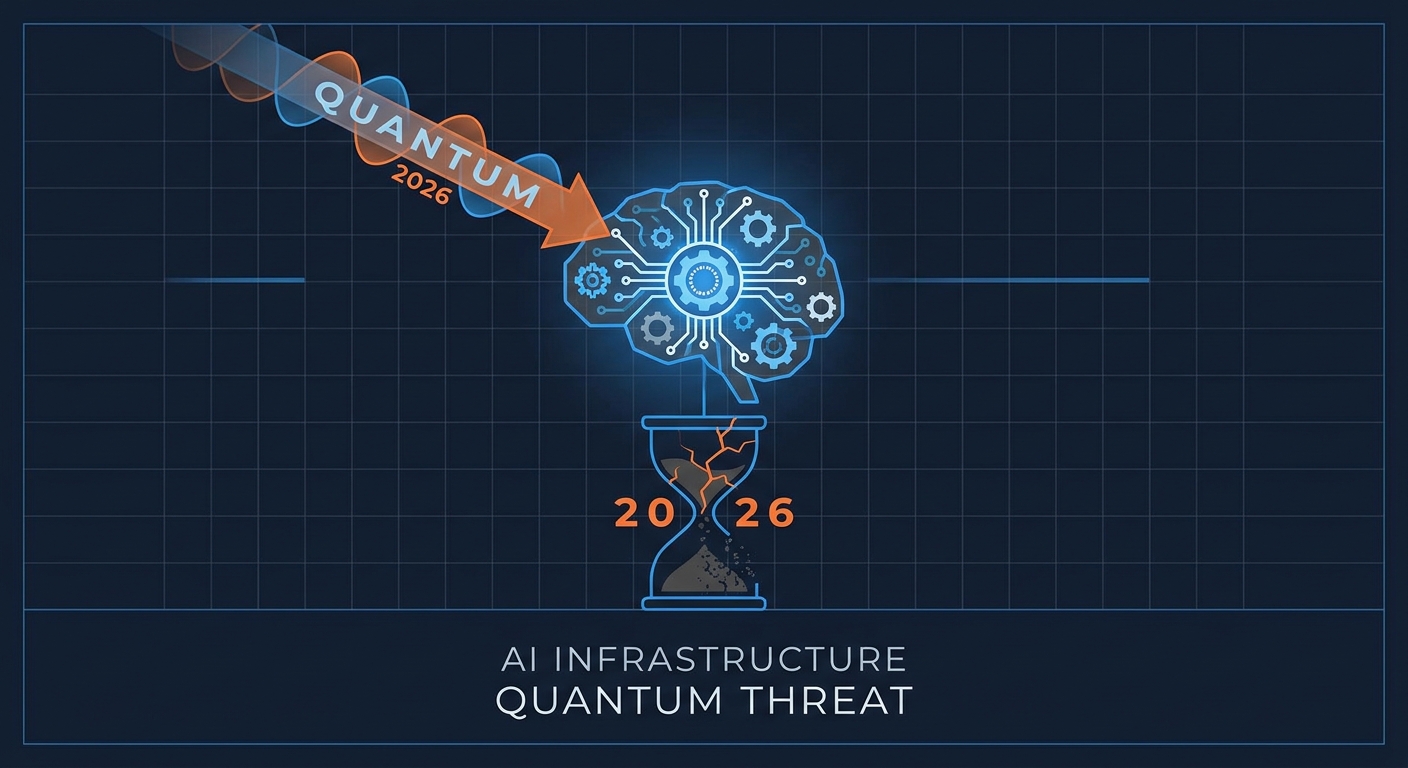
In most current setups, MCP relies on standard TLS handshakes. It’s the same tech used to secure your online banking. It’s great at stopping a bored script kiddie on your local Wi-Fi, but it’s completely blind to the quantum threat. As outlined in our analysis of Quantum Threats to AI Infrastructure 2026, relying on classical RSA and Elliptic Curve Cryptography (ECC) makes your MCP connections a sitting duck.
When your agent pulls a sensitive file from a server via MCP, that transmission is likely being harvested by someone playing the long game. It’s not a question of if your current setup is vulnerable, but how much of your data is already sitting in an adversary’s storage farm.
How Does Quantum Computing Disrupt Current AI Security Standards?
Our current digital locks rely on math problems that are notoriously hard for classical computers—like factoring giant prime numbers. A regular computer would take billions of years to crack these.
Enter Shor’s Algorithm. When run on a sufficiently powerful quantum machine, it turns these "impossible" problems into trivial ones. It effectively turns a billion-year task into a coffee break.
The "trust" model in your MCP implementation assumes the transport layer is solid. If your agent trusts a tool because the TLS certificate is valid, but that TLS tunnel can be ripped open by a quantum computer, your entire chain of custody is broken. You’re essentially locking your front door with a paperclip.
What is Post-Quantum AI Infrastructure Security?
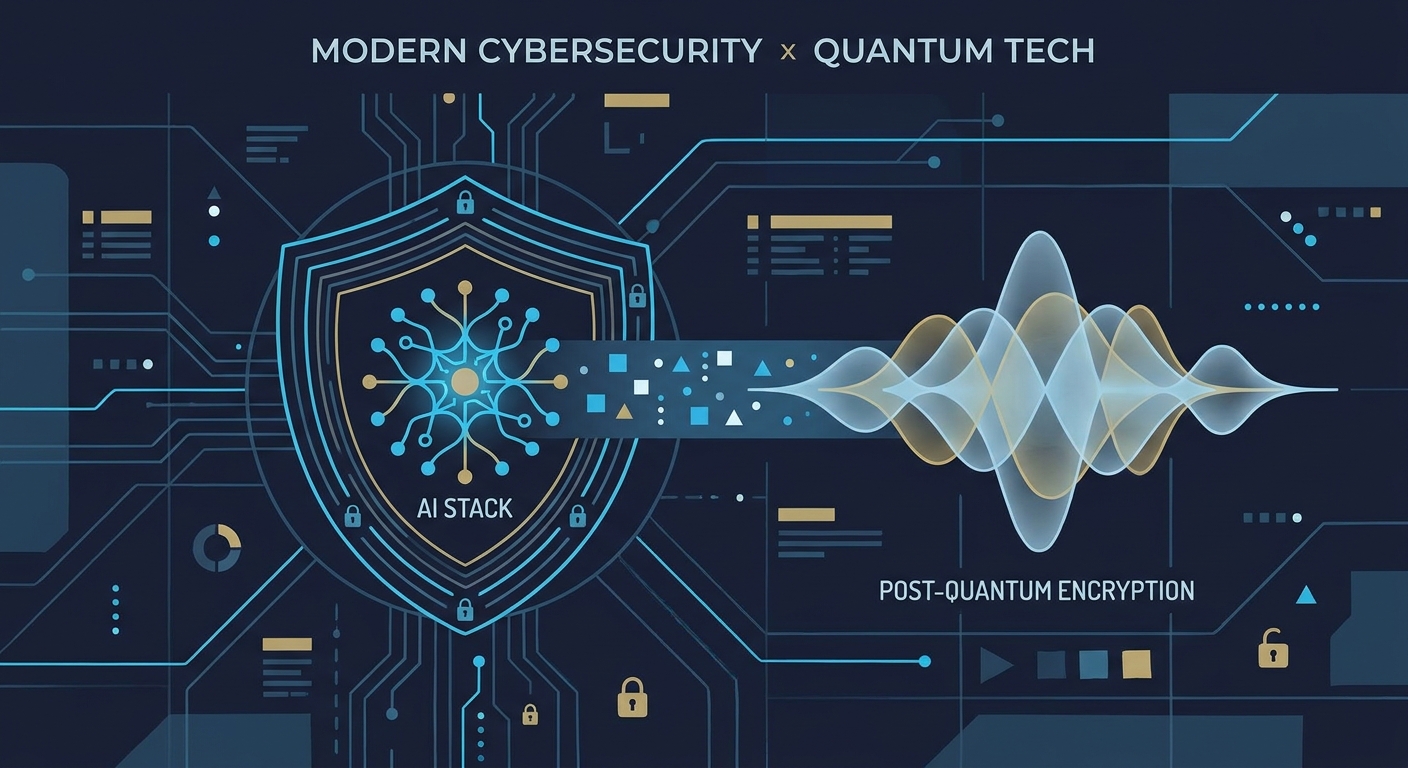
Post-quantum cryptography (PQC) isn't just "stronger" encryption. It’s a complete architectural shift. It uses different mathematical foundations—like lattice-based cryptography—that are resistant to quantum algorithms.
The move toward NIST Post-Quantum Cryptography Standardization is your roadmap. Algorithms like ML-KEM (Module-Lattice-Based Key-Encapsulation Mechanism) allow systems to swap keys in a way that stays secure even when a quantum computer is staring at the traffic. For you, this is about "algorithmic agility." You need the ability to swap out your crypto primitives without tearing down your entire AI ecosystem every time a new threat emerges.
How Do You Implement Hybrid Cryptography for MCP?
Don't throw away what you have. Instead, use a "Hybrid" or "Layered Defense" strategy.
Think of it like a deadbolt on top of your existing lock. You combine a classical key exchange (like ECDH) with a PQC algorithm (like ML-KEM). If the PQC implementation ends up having a undiscovered bug, your classical layer keeps you safe. If the classical layer gets broken by a quantum computer, the PQC layer holds the line. This is the gold standard for forward secrecy, ensuring your session keys stay safe. As noted by the CISA PQC Initiative, this is the safest transition path for anyone managing sensitive, long-lived data.
What Does a Zero-Trust Architecture Look Like for Agentic AI?
In an agentic world, the "perimeter" is a ghost. An agent might call a cloud tool, query a local database, and then trigger another agent on a completely different network. You can't manually verify every single request. You have to pivot to policy-driven security.
Zero-Trust for MCP means every tool call is guilty until proven innocent. You need to cryptographically verify the identity of the agent and the server at every single hop, using PQC-hardened tunnels to stop context leakage. You should be running automated policy checks that inspect the intent and scope of a request before it ever hits the MCP server.
Your Roadmap to a Quantum-Ready MCP Environment
Securing your infrastructure against quantum threats isn't a quick fix. It’s a marathon. Here is how you get ready:
- Discovery & Inventory: You can't fix what you can't see. Map every MCP server, every agent endpoint, and every data flow in your stack. Find where the sensitive context lives.
- Risk Assessment: Prioritize. What are your "crown jewels"? Which data flows cause the most damage if decrypted in five years? Start there.
- Hybrid Deployment: Integrate PQC libraries into your MCP stack. Keep it modular so you can swap algorithms as NIST standards evolve. Check out our Hardening MCP Guide for the technical breakdown.
- Policy Hardening: Implement identity-based security. Ensure that even if a connection is compromised, the agent's access is scoped so tightly that the damage is contained.
Frequently Asked Questions
What is "Harvest Now, Decrypt Later" and why does it affect my AI agents today?
HNDL is the practice of intercepting and storing encrypted data today with the intent of decrypting it once quantum computing becomes powerful enough to break classical encryption. It affects your agents today because the "context" they exchange—API keys, proprietary data, and strategic logic—often has a long shelf life, making it a high-value target for state-level intelligence gathering.
Does implementing Post-Quantum Cryptography (PQC) slow down AI model performance?
While PQC algorithms often involve larger key sizes and slightly more intensive computation than classical counterparts, the performance impact on modern AI infrastructure is generally negligible. When implemented correctly within a hybrid model, the latency added is minimal compared to the latency inherent in LLM inference and network communication.
Is the Model Context Protocol (MCP) inherently insecure without PQC?
MCP is a protocol for connectivity; it is not "insecure" by design, but it is "quantum-vulnerable" because it relies on the same classical transport security as the rest of the web. Without PQC, it lacks the necessary mathematical defenses against future quantum-capable adversaries who can bypass current TLS standards.
How do I know if my existing infrastructure is quantum-ready?
If your infrastructure relies exclusively on RSA or ECC for key exchange and digital signatures without a secondary, lattice-based cryptographic layer, it is not quantum-ready. A quantum-ready environment requires cryptographic agility—the capacity to update algorithms without replacing your entire software stack.
Are there regulatory requirements for PQC in AI today?
Regulatory bodies are moving quickly. With recent guidance from CISA and the White House, organizations handling sensitive, critical, or national security data are increasingly being mandated to adopt quantum-resistant standards. Even for private enterprise, the risk of data exfiltration is pushing PQC implementation into the "must-have" category for 2026 and beyond.