11 Emerging Security Risks with MCP and How Post-Quantum Standards Can Help

TL;DR
- ✓ Persistent MCP tunnels bypass traditional WAF inspection and security controls.
- ✓ Shadow MCP deployments create invisible attack surfaces across enterprise environments.
- ✓ Harvest Now Decrypt Later attacks necessitate immediate post-quantum security adoption.
- ✓ Centralized registry and granular policy enforcement are essential for AI governance.
The Model Context Protocol (MCP) has become the connective tissue of the 2026 AI enterprise. It’s what turns passive chatbots into actual, tool-wielding agents. But here’s the problem: we’ve moved from simple, static API calls to persistent, two-way agentic connections, and our security controls are still living in 2015.
Companies are racing to plug MCP into their workflows to get that sweet, autonomous speed. In the process, they’re ignoring a massive dual-threat. You’ve got the immediate, mechanical bugs in the protocol itself, and then you’ve got the looming, existential dread of "Harvest Now, Decrypt Later" (HNDL) quantum attacks. Patching isn’t enough. You need a total pivot toward Post-Quantum AI Infrastructure Security: A Complete Guide for 2026.
Why is the Model Context Protocol (MCP) Changing the Attack Surface?
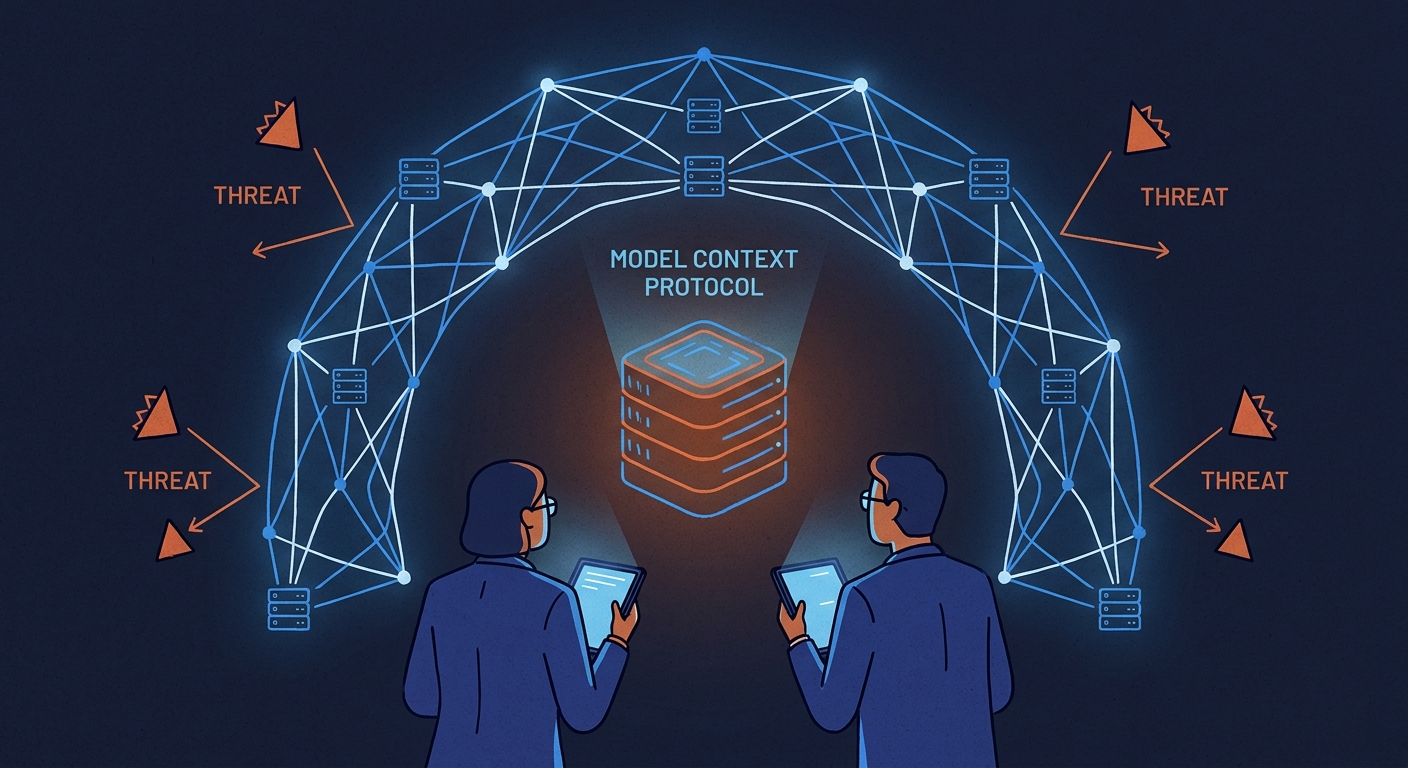
Old-school security assumed every request was a one-off. You authenticate, you check the box, you inspect the packet, and you slam the door shut. MCP throws that out the window. Because these connections are persistent and stateful, they’re basically open tunnels between your LLM Host and the MCP Server.
Your standard Web Application Firewalls (WAFs)? They’re mostly dead in the water here. They see a handshake, they see an encrypted stream, and then they’re staring at a wall. They don’t have the deep packet inspection needed to understand the specific, twitchy telemetry of MCP. To them, it’s just a black box.
The "Shadow MCP" Epidemic: Why Traditional Security Fails
Remember "Shadow IT"? It’s back, but with a vengeance. Now we’re dealing with "Shadow MCP." Developers and data scientists are spinning up local or remote MCP servers to hook their agents into internal databases, private codebases, or sensitive Jira instances.
These connections usually bypass the front door. They operate in a total security vacuum. If you don’t have a centralized registry for these servers, you can’t rotate credentials, you can’t check identities, and you certainly can’t spot weird behavior. You can’t govern what you can’t see.
The 11 Emerging Security Risks in MCP Deployments
To keep your systems from falling apart, we need to get real about the risks.
Transport and Network Risks
- Man-in-the-Middle (MitM) Interception: Because these tunnels stay open, an attacker sitting on your network path can hijack the session. They can literally inject malicious instructions right into the agent's context window.
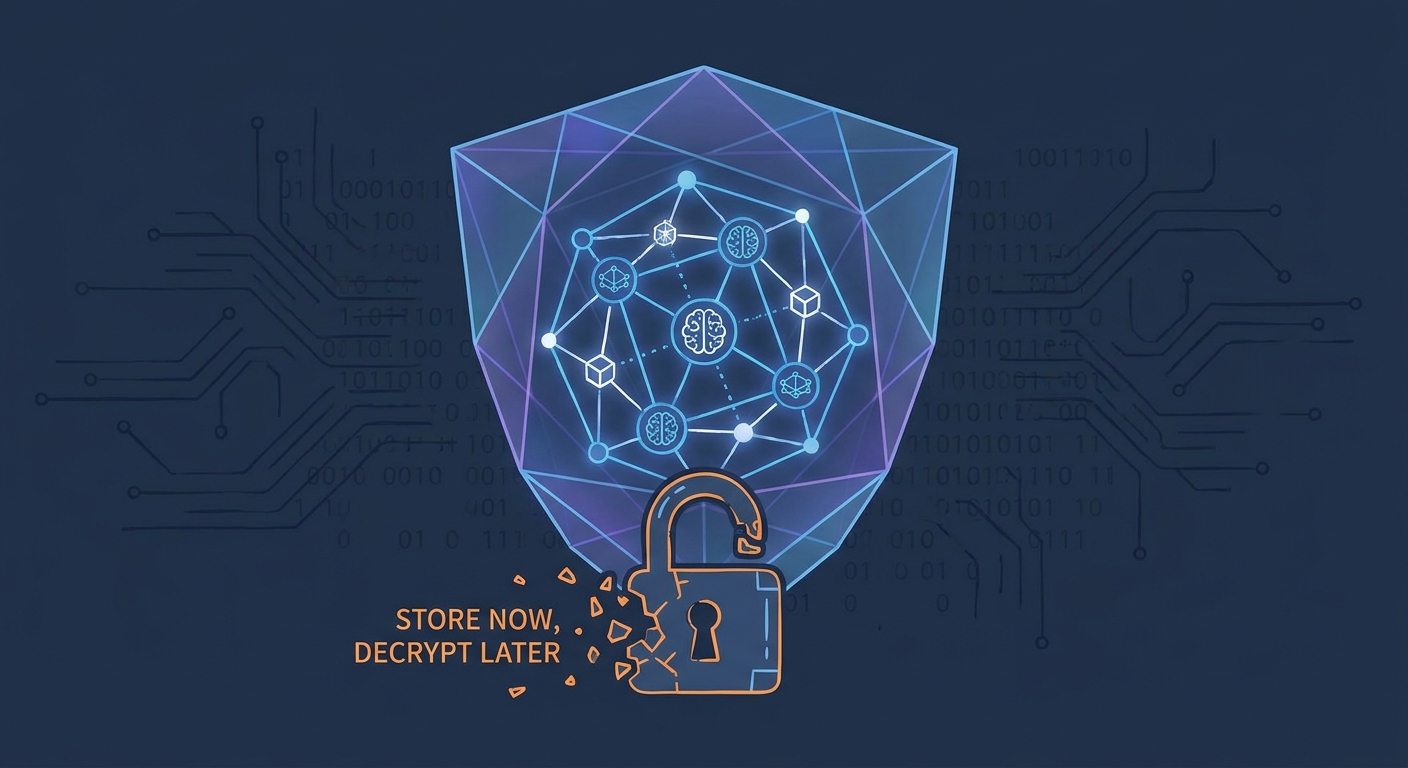
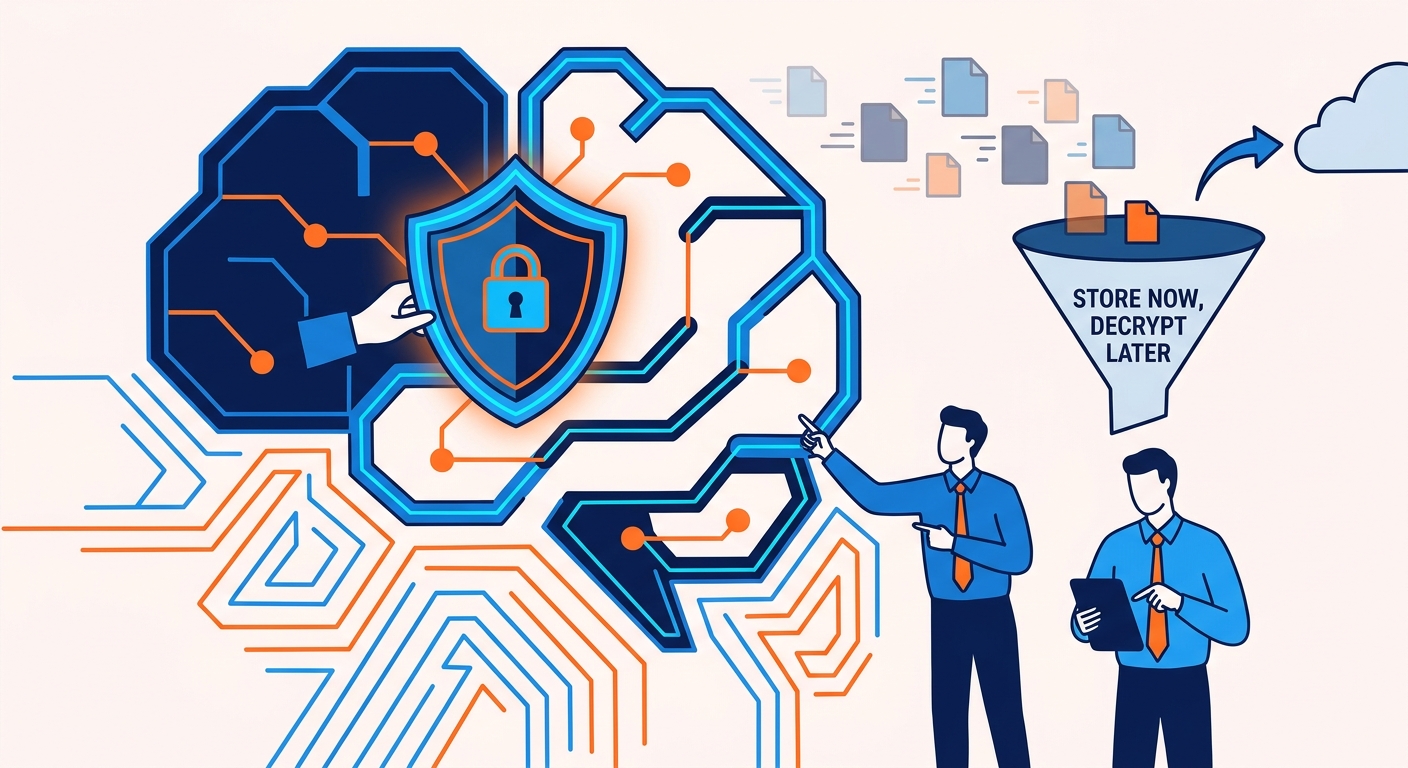
- Harvest Now, Decrypt Later (HNDL) Data Theft: Hackers are currently vacuuming up encrypted MCP traffic. They don't need to break it today. They’re storing it. Even if you’re on TLS 1.3, a future quantum computer will chew through your current RSA/ECC encryption like it’s nothing. Your historical data becomes an open book.
- Protocol-Level Traffic Manipulation: There’s a lack of rigorous validation at the transport layer. Attackers can mess with the "Capabilities" handshake, tricking your LLM into thinking a server has a tool it doesn’t. That leads to unhandled exceptions or, worse, logic bombs.
Authorization and Identity Risks
- Over-Privileged Agent Access: This is the "God Mode" trap. Too many MCP servers get broad, sweeping access to internal APIs. If the agent gets compromised, the attacker inherits every single one of those permissions.
- Persistent Token/Session Leakage: Since MCP sessions live forever, tokens hang out in memory or local caches for way too long. If someone compromises the host, those credentials are sitting there, waiting to be stolen for lateral movement.
- Lack of Granular "Tool-Level" Authentication: Right now, we’re mostly authenticating the server. We aren't authenticating the tools inside the server. One server might have five safe tools and one administrative back door. If you authenticate the server, you’ve just given the keys to the kingdom.
Input and Output Risks
- Malicious Tool Injection: It’s easy to point an agent at a rogue MCP server. When the LLM calls a "get_file" tool, the rogue server returns a payload that triggers a vulnerability in your host environment.
- Prompt-to-Code Execution Vulnerabilities: By tweaking the context provided by an MCP server, an attacker can trick the LLM into writing and executing malicious code. It’s "indirect prompt injection," but with the power of an autonomous agent behind it.
- Context-Poisoning via Untrusted MCP Servers: If an attacker feeds an LLM biased or falsified data via MCP, they can steer the agent’s decision-making. You aren't just losing data; you're losing control of the AI's logic.
Compliance and Governance Risks
- Audit Log Fragmentation: Since MCP traffic is often scattered across different, decentralized services, your logs are a mess. If half your traffic is in the cloud and the other half is stuck in ephemeral container logs, you don’t have an audit trail—you have a scavenger hunt.
- Failure to Meet NIST-Mandated Quantum Resistance: NIST Post-Quantum Cryptography Standards are becoming the law of the land. If your infrastructure is still relying on classical crypto by late 2026, you’re going to fail your audits. Period.
How Do We Bridge the Security Gap with Post-Quantum Cryptography?
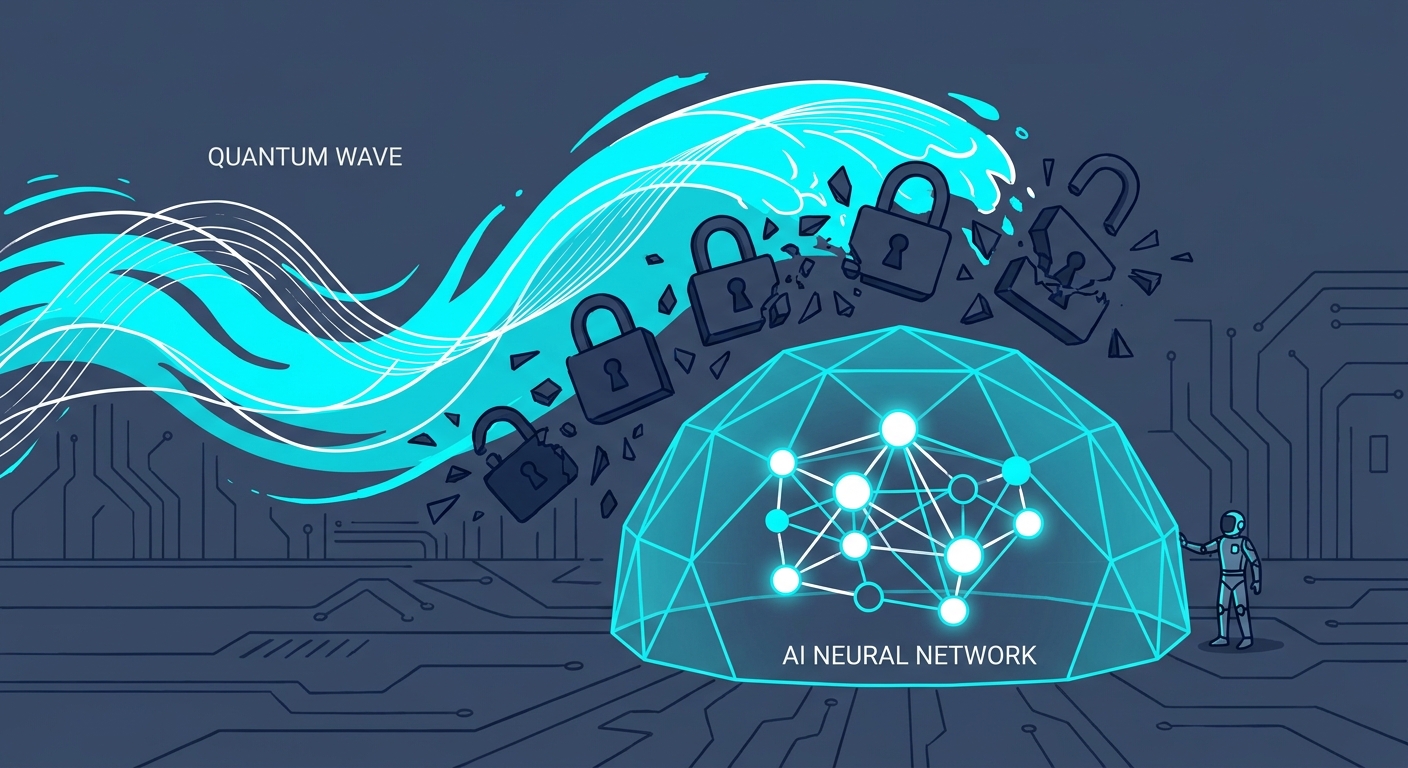
We have to move from classical algorithms like RSA and ECC to lattice-based cryptography. It’s not optional anymore. Lattice-based cryptography—the stuff behind ML-KEM (Kyber)—is resistant to Shor’s algorithm, which is the "quantum hammer" that will eventually shatter today’s encryption.
Use a "Hybrid Cryptographic Wrapper." You can wrap your existing MCP traffic in a quantum-resistant layer without having to rip out your entire stack. It’s about hardening, not replacing.
Implementing a Hybrid Cryptographic Approach for MCP
Start with a phased migration. Don't try to boil the ocean. Identify your most sensitive MCP tunnels—the ones touching PII, financial data, or admin tools—and prioritize them. As you look into the Top 5 Quantum-Resistant Cryptographic Algorithms for AI Infrastructure, look for libraries that handle "hybrid key exchange."
For the technical deep-dive, the Trail of Bits: MCP Security Hub is the best place to start testing your protocol security.
The CISO’s Roadmap: Moving Toward Zero-Trust AI
This is a marathon, not a sprint. CISOs should check out the Cloud Security Alliance: Quantum Migration Roadmap to build a real plan.
Step one: Audit for "Shadow MCP." Find every connection, build a registry, and enforce Zero-Trust. If an agent wants to call a tool, it needs to be authorized and logged, every single time. Then, start layering in those PQC algorithms.
Conclusion: Secure MCP Adoption as a Competitive Advantage
In 2026, security isn't just a cost center—it's your biggest competitive advantage. If you can prove your agentic infrastructure is quantum-resistant, audited, and hardened, you’re the one your customers will trust with the heavy lifting. By tackling these 11 risks today, you aren't just protecting the status quo; you’re building a foundation that will actually survive the next few years.
Frequently Asked Questions
Why isn't standard TLS 1.3 enough to protect my MCP traffic in 2026?
TLS 1.3 is great for stopping today's hackers, but it uses classical math that quantum computers will eventually break. If someone records your traffic now, they can decrypt it later when they have the hardware. TLS 1.3 doesn't stop the "Harvest Now" part of the problem.
What is the most common vulnerability in current MCP deployments?
Over-privileged tool access. People love to give agents "God Mode" permissions to make things easier, but that just means if the agent gets tricked, the attacker can do anything the agent can do—like deleting databases or running shell commands.
Do I need to rebuild my entire MCP infrastructure to be quantum-resistant?
Nope. A hybrid wrapper lets you keep your old systems running while wrapping them in a new, quantum-proof layer. It’s the easiest way to get compliant without causing a total system outage.
How does the "Shadow MCP" audit checklist assist in risk mitigation?
It forces you to see what you've been ignoring. By comparing every active connection against an authorized list, you can immediately spot the rogue servers that shouldn't be there and shut them down before they become a massive security hole.